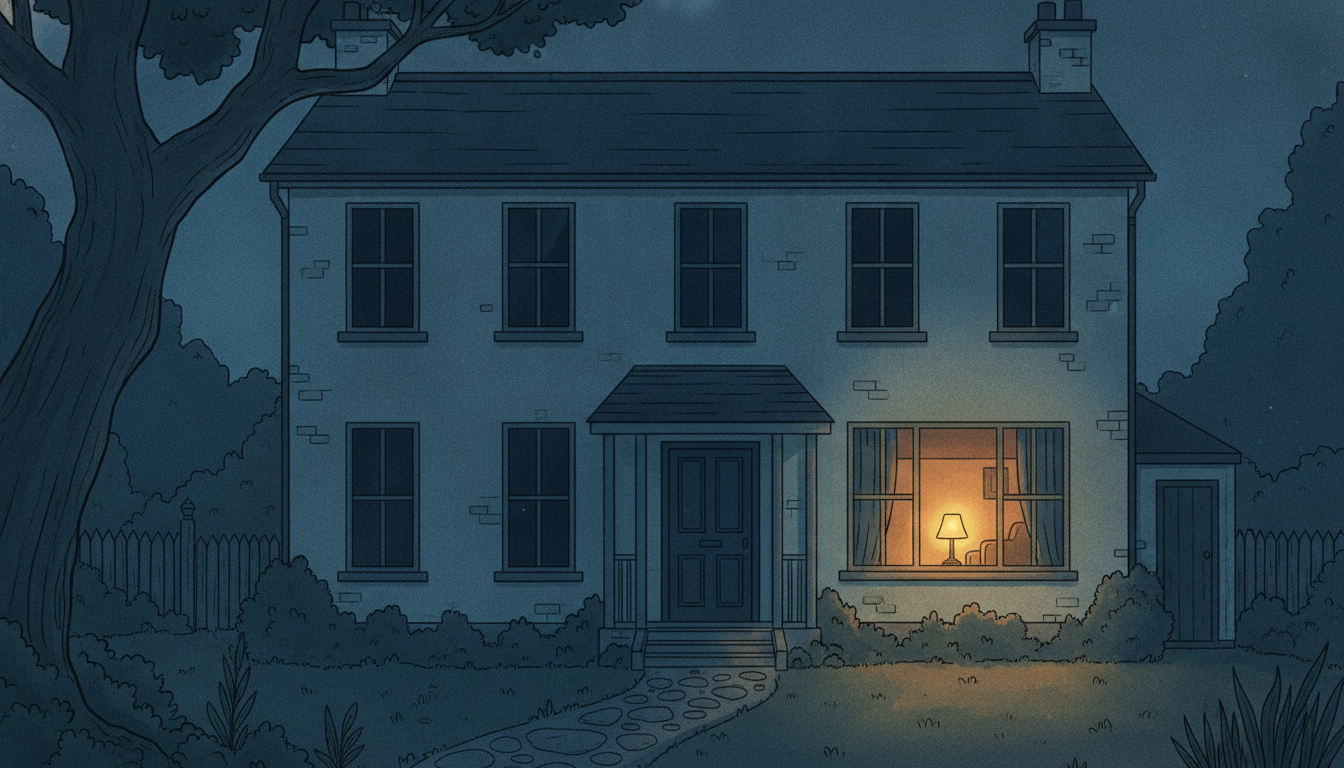

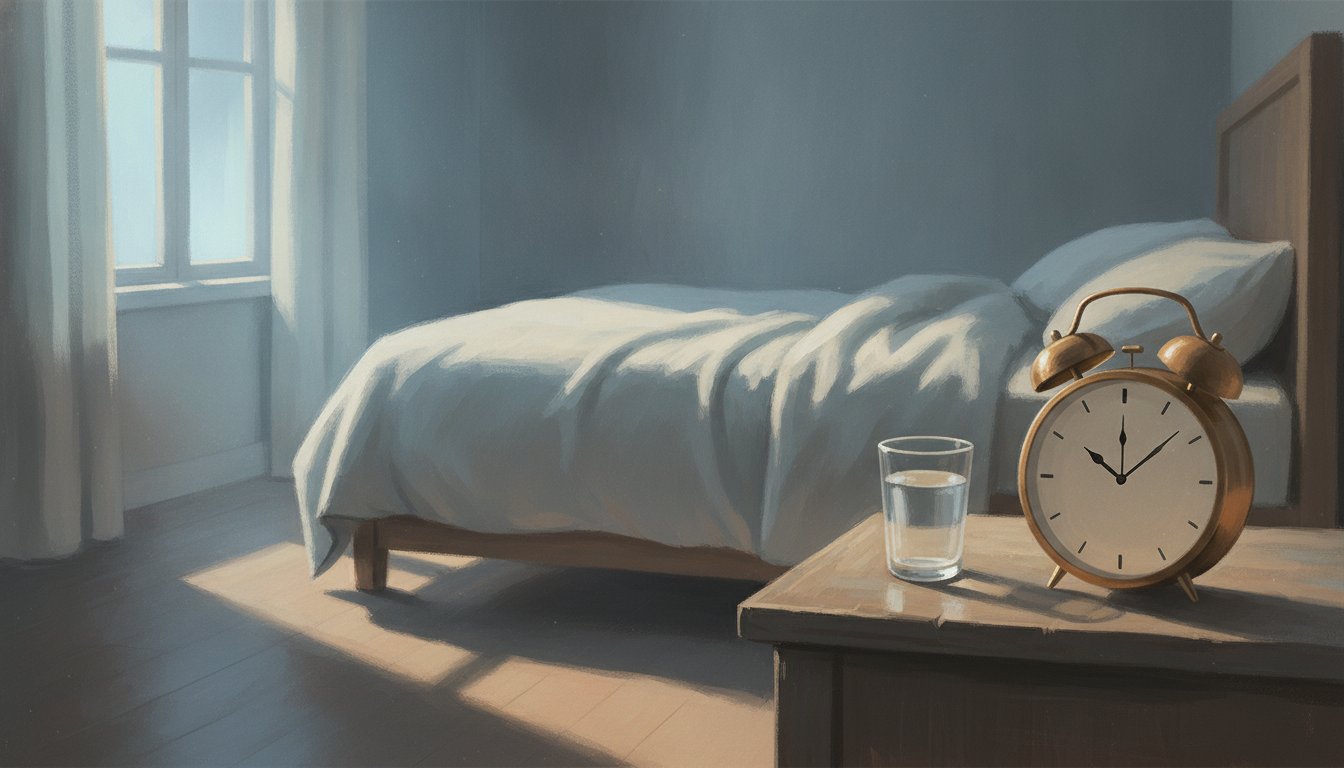
3:12. You know the exact time because the first thing your hand did, before your eyes were properly open, was find the phone on the bedside table. The screen lit up the ceiling. Nothing woke you. No noise, no dream you can remember. Your eyes are simply open.
The sum starts on its own. The alarm goes off at 6:45. If you fall asleep right now, that leaves three hours and thirty-three minutes. The meeting is at 9:30. Then it is 3:26, and the sum has to be done again with less.
By morning you have a verdict: I can't sleep anymore, something is broken. This piece is about that verdict. It is general information about sleep. It does not diagnose anything and does not replace a doctor or a sleep specialist.
Waking up is part of the night
A night of sleep is not one long dive. It runs in cycles, and between them the brain comes close to the surface. Greg Murray, a psychology researcher who studies sleep and mood at Swinburne University of Technology in Australia, puts it plainly: we wake up many times each night, and light sleep is more common in the second half. When sleep is going well, we are unaware of these wakings. Add a bit of stress, he writes, and there is a good chance a waking becomes fully conscious.
Around three or four in the morning the body is also turning towards the day. Murray lists the changes. Core body temperature starts to rise, the drive to sleep is weaker because you have already had a good part of the night, and cortisol, a stress hormone, is climbing. Being awake at that hour now and then is not a sign of damage. What matters more is what happens in the minutes that follow.
The meter in your head
Think of that glance at the phone as a taxi meter switching on. Until then you were only awake. Now the night has a fare, and every minute goes onto tomorrow's bill: the heavy head in the meeting, the extra coffee, the evening you will spend wrecked. The clock only shows the time. The meter turns it into debt, and debt is hard to sleep on.
The research backs the image up. In two experiments published in 2007, Nicole Tang, Anne Schmidt and Allison Harvey asked people to watch a clock while they tried to fall asleep. Compared with people who did not watch one, the clock watchers worried more and took longer to drop off. In the second experiment, with people diagnosed with insomnia, those who watched a clock also overestimated how long they had lain awake, more than a group who watched a display of digits that meant nothing. The study looked at falling asleep at bedtime, and its results on objectively measured sleep were mixed. It is still a fair warning for 3 a.m.
The meter also overcharges. A 2012 review in Psychological Bulletin by Harvey and Tang took on a long-standing puzzle: people with insomnia often underestimate how much they slept and overestimate how long it took them to fall asleep, compared with objective recordings such as those made in a sleep lab. The authors describe the pattern as widespread, with exceptions. Of the thirteen explanations they weighed, three had the best support. Light sleep can feel like being awake, worry keeps attention fixed on being awake, and brief awakenings cut the night into pieces. The hour you remember lying awake may hold some sleep you never noticed.
Then there is what the mind does while the meter runs. Murray calls 3 a.m. worry “problem solving's evil twin”: it picks a problem, runs it to the worst ending and leaves out every resource you will have by daylight. If you know the feeling of replaying a conversation in bed, you know how fast the fare goes up.
How to switch off the meter
None of the moves below is a cure, and none of them works every night. They come from the clinicians and studies quoted here and from the NHS advice on insomnia. Their job is to keep a waking small.
Turn the clock to the wall. Do it before bed, and leave the phone somewhere you would have to get up to reach. If you wake, you will not know whether it is 1:40 or 4:50, and without the number the meter has nothing to charge. The sleep psychologist Lisa Strauss, in a column published in Folha de S.Paulo, describes patients who use an alarm that slowly brightens before wake-up time. If the room is still dark, they know they can go back to sleep without checking the clock and starting to calculate how much sleep is left.
Give your attention somewhere duller to go. Murray brings his attention to the sound of his own breathing, and when thoughts arrive he brings it back. He admits that some nights it works and some nights it doesn't.
If it drags on, get up. Murray's limit is fifteen or twenty minutes caught in negative thinking. Then he gets up, turns on a dim light and reads. You don't need the clock for this, a rough sense that it has gone on too long is enough. Pick something calm and a little boring, away from the phone, and go back to bed when your eyelids get heavy. We explained why the bed should stay a place for sleep in sleep hygiene beyond the basics.
Keep the morning where it was. After a bad night the instinct is to sleep in or take a long nap. The NHS advice on insomnia says the opposite: get up at the same time every day, don't sleep in after a bad night, and don't nap during the day. Strauss explains why. The pressure to sleep builds with the hours you spend awake, and sleeping late or napping long to make up for a bad night drains it, so the next night starts with less.
Give the worry a daytime appointment. Strauss suggests facing worries constructively well before bed, so they are less likely to turn up in the night. One way to do it is ten minutes in the late afternoon with a sheet of paper, the problem and one next step. At 3 a.m. you can remind the thought that it already has a time slot.
When waking up is telling you something else
Waking in the night now and then, or for a stressful week, is ordinary. The NHS calls insomnia long-term once it has lasted three months or more, and suggests seeing a GP if changing your habits has not helped, if it has gone on for months, or if it makes daily life hard to cope with. Insomnia can be treated. A GP may offer cognitive behavioural therapy, face to face or through an online programme.
Some patterns deserve a doctor sooner. Loud snoring, or pauses in breathing that someone else notices, can point to sleep apnoea. Waking very early with a low mood that lasts all day, or losing interest in things you used to enjoy, can be part of depression, which Strauss lists among the causes of early waking to consider; we looked at these patterns in when insomnia means something else. She also mentions the rebound when alcohol or sleeping pills wear off in the night. If you take sleeping pills, talk to your doctor before changing or stopping them. If you have thoughts of hurting yourself, contact local emergency or crisis services now.
Sometimes what wakes up at 3 a.m. is a worry that never gets said out loud during the day. NoOneToTalk offers anonymous listening from peers, a place to say it to someone who doesn't know you. It is a place to talk. It is not therapy, and it is not medical treatment.
Tonight the clock faces the wall. At some point your eyes open, your hand goes to the bedside table and finds nothing there.
You don't know what time it is, so there is nothing to add up. You turn onto your other side.
If you or someone you know is in crisis, please seek help. International directory: findahelpline.com.