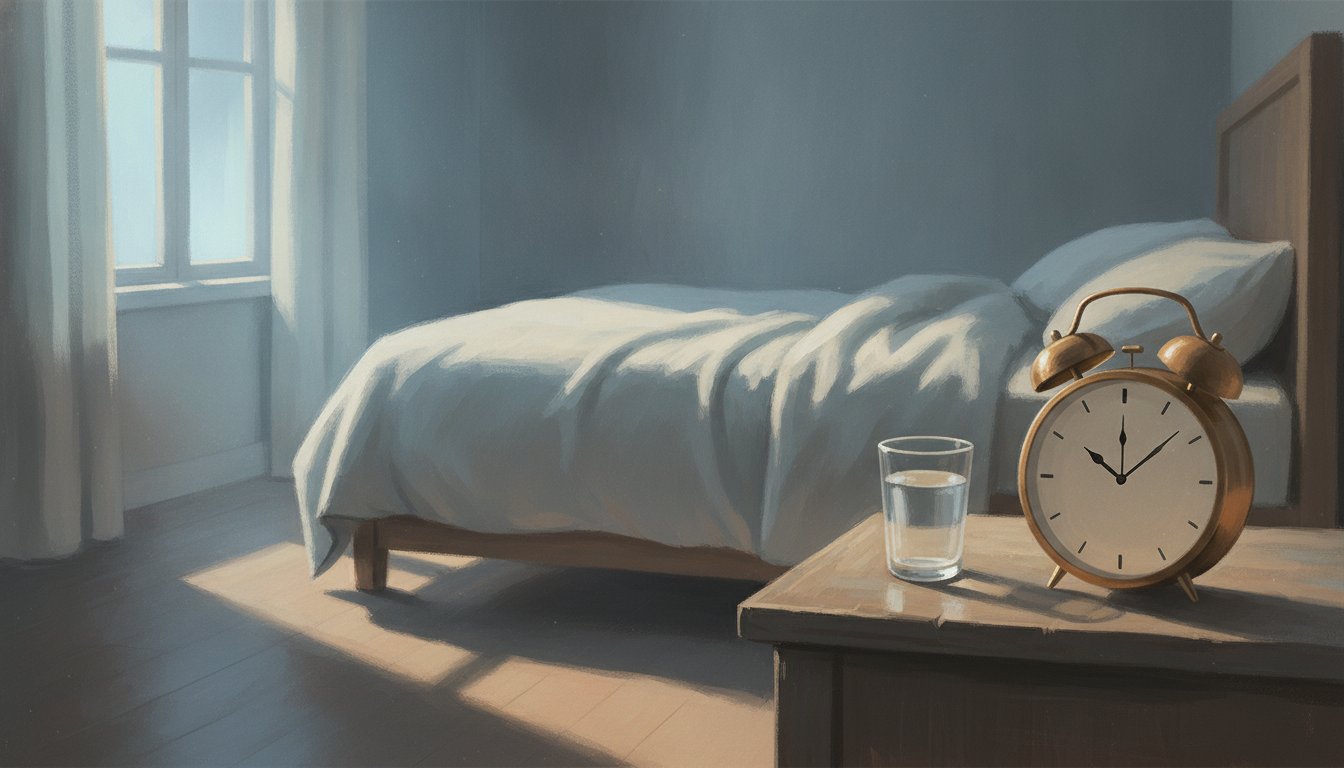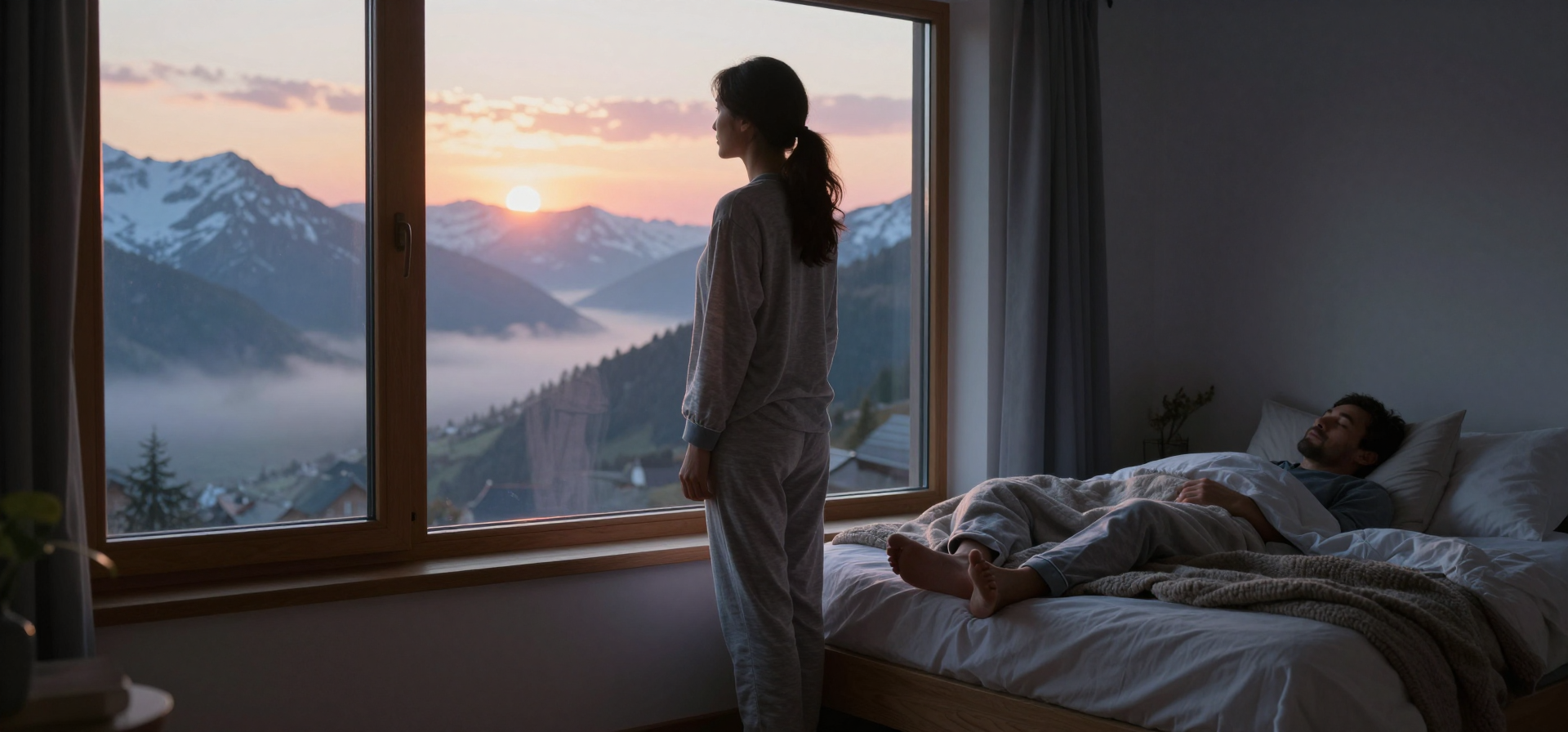

The room is dark. The body is horizontal. The clock has already given its verdict, and still something refuses to leave.
You lie there as if rest were a door you should simply walk through. Instead conversations keep glowing, tomorrow’s tasks hum, old worries sit at half volume. The night is not attacking you. The lights of the day were never switched off.
This is what insomnia often is: not a failure of will, and not proof that you “do not know how to sleep.” It is a mind that did not close its accounts. The day ended on the calendar. Inside, the tabs stayed open.
This text is not a diagnosis and does not replace professional care.
Activity without an audience
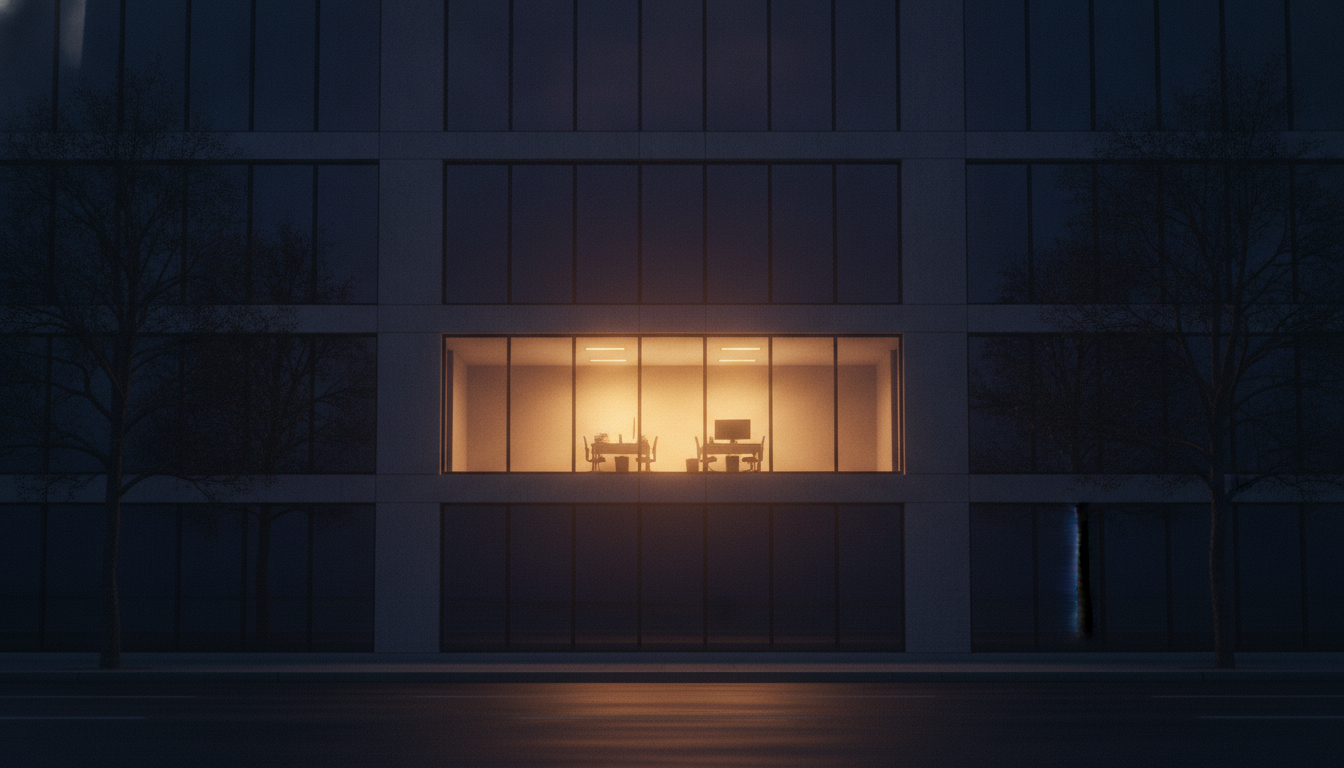
Picture the day after hours. Desks empty, corridors quiet, yet something still lit: emails drafted and undrafted, a meeting replaying on a loop in one corner. That is the nocturnal mind when it cannot rest. Urgency without a deadline that can actually be met at 2 a.m.
People who cannot sleep often feel accused by their own bed. As if lying still and failing were a moral shortcoming.
It is not. The nervous system does not obey bedtime rules the way a calendar does. It obeys unfinished business: emotional, cognitive, unfinished conversations with yourself. So the lights stay on. Not because you enjoy them. Because no one has yet said, clearly enough: this part of the day is over.
Rules do not settle the accounts
Here is a useful distinction. Sleep hygiene (timing, screens, caffeine) can help the body arrive ready to rest. It cannot fire the employees who are still arguing in your head. Forcing “I must sleep now” often adds a second demand: policing yourself for not sleeping.
The night is not the enemy. Treating it as a battlefield turns rest into another performance. What the mind needs is not a stricter schedule alone. It needs permission to close accounts that will not be settled before dawn, and will not become more settled by staring at them in the dark.
Some thoughts are night workers by habit, not by necessity. They learned that silence is when they get heard. Naming that pattern already lowers the volume.
Closing the accounts, not winning the night
You do not have to empty your head of every thought. You have to stop assigning new tasks to the night crew. When a worry arrives at 1 a.m., try placing it: “This belongs to tomorrow’s desk.” Not to deny it. To relocate it. A thought that knows where it lives loses some of its claim on the dark.
Sometimes the body needs a bridge, not a command: a glass of water, a slower breath, a few minutes of something dull and kind, not another scroll through unfinished business. The point is not to “defeat” insomnia with a technique. The point is to stop feeding the lights.
If sleep does not come, lying there in war with yourself is still a form of overtime. Getting up briefly, changing the scene, returning when the body softens. That can be closing a door, not surrender.
A night that is allowed to be incomplete
You will not always sleep well. You may learn to stop treating every wakeful hour as a stolen future. Rest begins earlier than the pillow: in the late afternoon when you stop opening new mental files; in the evening when you let one conversation end without rewriting it; in the moment you notice the pull to keep working the day and choose, once, to stop.
The night is not asking you to fix the day. It is asking for fewer open tabs. Closing even one (a worry named and parked, a body allowed to be tired without a verdict) is already a small act of locking up.
Tomorrow the accounts will still be there. They were always going to be. What changes is whether the mind keeps the lights on for them until morning.
If you or someone you know is in crisis, please seek help. International directory: findahelpline.com.