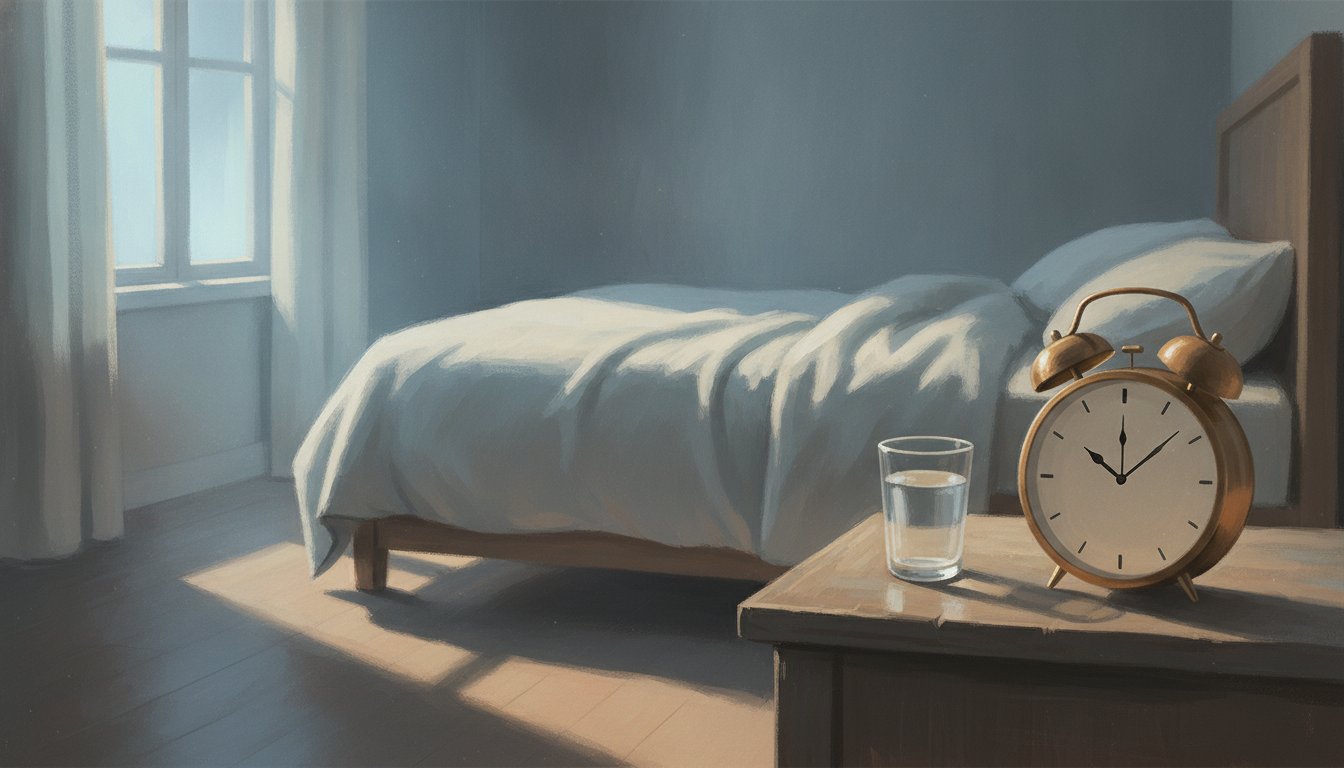


Insomnia means you regularly have trouble sleeping: it is hard to fall asleep, you wake in the night or too early and cannot get back to sleep, and you feel it the next day. The NHS calls it long-term insomnia once it has lasted three months or more.
We tend to think of insomnia as a stand-alone problem: a bad habit, a faulty mattress, a mistuned brain. So we attack it directly, supplements, apps, stricter schedules. Sometimes that works. Often it does not, because the insomnia was never the original story. It was a downstream symptom of something the rest of your life had no other way to express.
This does not mean every sleepless night is a deep message. Many are just stress, jet lag, a hard week. But when insomnia becomes persistent and resists the standard interventions, it is worth widening the frame.
Insomnia Patterns and What They Can Reveal
Different patterns of disturbed sleep often point in different directions:
Trouble falling asleep: Often related to anxiety, an overactive nervous system, or a daytime life that gives no space for thoughts to be processed.
Waking around 3 or 4 a.m. unable to return to sleep: Frequently associated with depression, grief, hormonal shifts, or chronic stress. Cortisol naturally rises in the early morning; if your baseline stress is high, that rise can wake you.
Light, restless sleep with vivid dreams: Sometimes seen in people processing trauma, big life transitions, or carrying heavy emotional content during the day.
Sleeping too much without feeling rested: Can point to depression, certain medical conditions, or a deep, accumulated fatigue from chronic overextension.
Waking already braced: A sense of dread, tension, or "incoming alarm" first thing in the morning is often a marker of anxiety or unresolved life stress.
None of these patterns is diagnostic on its own. They are invitations to ask, gently, what your life might be asking you to look at.
Mental Health and Sleep Run Both Ways
Insomnia can be a symptom of depression and a contributor to it. Poor sleep makes everything else harder.
The relationship between sleep and mental health is bidirectional. Depression, anxiety, PTSD, bipolar disorder, and ADHD all commonly disturb sleep. At the same time, poor sleep amplifies the symptoms of all of those conditions. This is why treating insomnia in isolation (without looking at what is going on emotionally) often plateaus. And why treating depression or anxiety without addressing sleep often plateaus too. Both layers usually need attention.
The Body Keeps Score, Especially at Night
Bessel van der Kolk's work on trauma shows that the body holds onto experiences the mind has not been able to fully process. Often, the body waits until the day's distractions are gone to bring those experiences forward. This is part of why people who have endured difficult things can do well in daylight and struggle at 2 a.m.
If your insomnia started after a specific event (a loss, a separation, a medical scare, a return to an old environment) that timing is important information. It does not mean you are "weak." It means your nervous system is doing its honest work of trying to metabolize something significant. Working with a therapist trained in trauma or grief can make a meaningful difference here.
Medical Causes Worth Ruling Out
Sometimes insomnia really is medical. Conditions worth raising with your doctor include sleep apnea (especially if you snore, wake gasping, or feel exhausted despite enough hours), thyroid dysfunction, perimenopause and menopause, chronic pain, restless legs syndrome, certain medications, and untreated mental health conditions. Ruling these out is not overreacting. It is a normal part of taking sleep seriously.
A Different Question to Ask
Instead of asking "how do I make myself sleep tonight?" (which tends to escalate effort) try asking, "what is my sleep showing me?" The answer may be simple: you need more rest in your days, you are overcommitted, you are grieving something you have not yet named. Or it may be more layered, and worth exploring with help.
Either way, the question shifts you from fighting your sleep to listening to it. That posture, even before anything practical changes, tends to soften the grip of insomnia. The body, in many cases, just wanted to be heard.