
You are at the gate at Gatwick. The screen says boarding is closing, and your passport is not in the bag. You tip everything out on the carpet: a stapler, your old school tie, a set of keys you have never seen. The queue is gone. The woman at the desk is shaking her head. Your legs will not run.
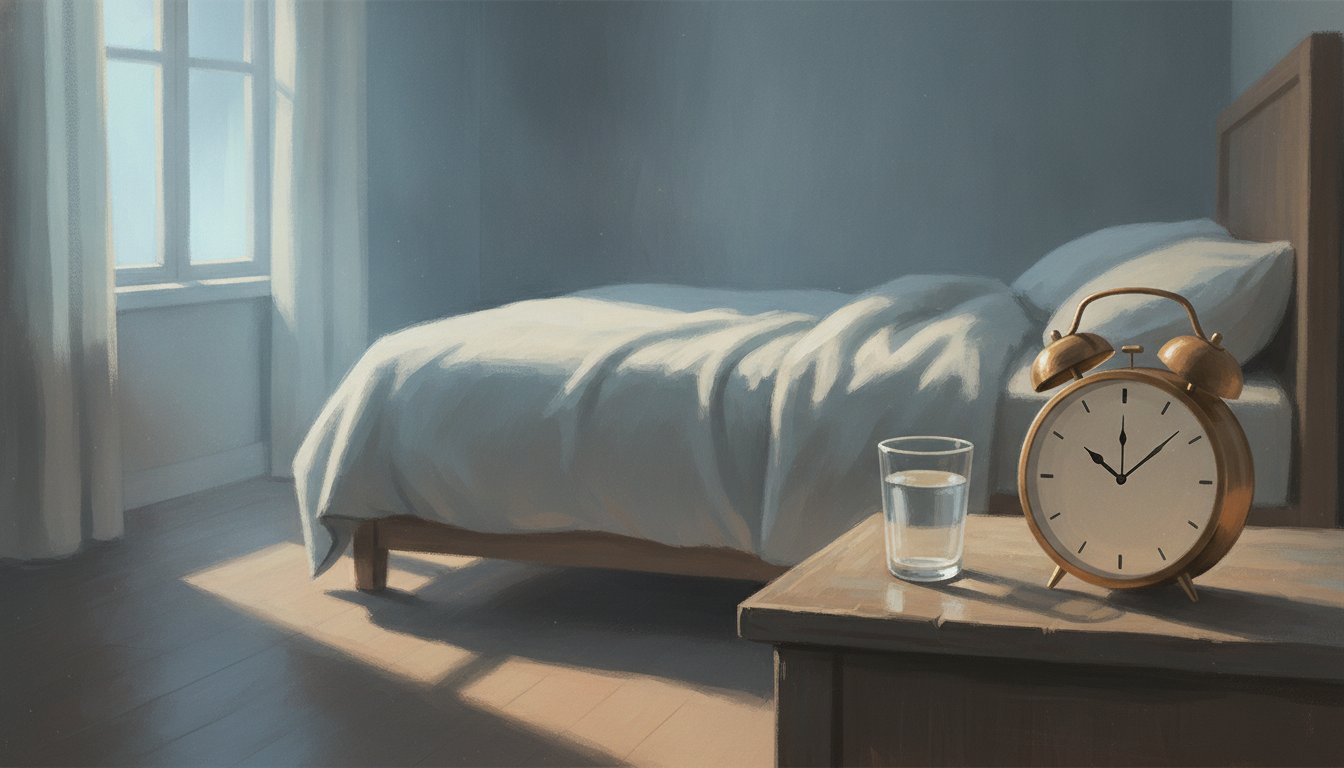
Then the ceiling. It is 4:40 in the morning, the radiator is ticking and your T-shirt is damp at the back. Your heart is going as if you really had sprinted down the terminal. You lie still and wait for it to slow.
It is the third time this month. Same gate, same missing passport, a few props changed. And with the heartbeat comes a question that keeps you awake longer than the dream did: what is wrong with me, and what is this trying to tell me?
A dream that comes back feels like a message, or even a warning. It works more like a rehearsal, and rehearsals have a logic you can follow.
A theatre that rehearses at night
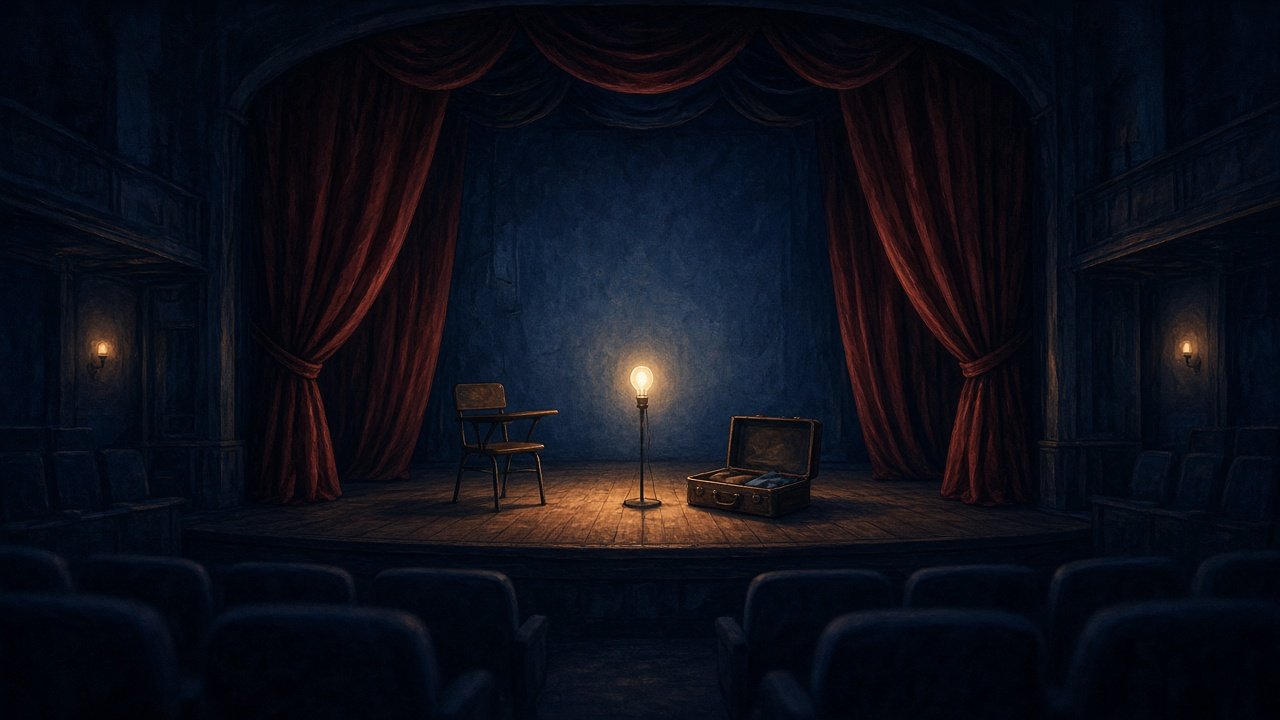
Picture a small theatre inside your head. During the day the director sits in the front row. She checks the script, cuts the scenes that make no sense and sends the actors home on time.
At night, in the phase of sleep called REM, the director goes home. The stage crew stays. Sleep specialists interviewed by Folha de S.Paulo describe it in plainer terms: in REM the areas linked to memory, emotion and imagination are especially active, while the regions for logical reasoning and critical control quiet down. So the crew starts rehearsing with whatever the day left on the stage. A deadline, an argument, an email you have not answered. With no one checking the script, a work worry can come out as a gate that is closing and a passport that is gone.
The crew also has a favourite instrument, and it is loud. When a dream turns frightening, the neurologist Andrea Bacelar told Folha, the amygdala (the part of the brain that handles fear and threat) is more strongly activated. Your heart rate rises, and you can wake up sweating. The body reacts to the rehearsal as if it were the show.
That is why the morning after can feel so confusing. The columnist Tim Dowling, describing a driving nightmare he has had in different versions since he was five, wrote in The Guardian that he woke up "trying to determine where the road home ended and the nightmare began". The scenery is convincing. It is still scenery.
Why the same scene keeps coming back
The crew rehearses what feels unfinished. Bacelar's point is that nightmares feed on how you felt during the day: stress while awake raises the chance of disturbing dreams, and a bad night makes it harder to manage your emotions the next day. The loop can run for weeks without anything new happening in your life.
Being short of sleep adds pressure. Renatha El Rafihi Ferreira, a psychologist at the University of São Paulo, explained in the same piece that when you finally sleep after missing some, REM can come back longer or more intense, and with it more vivid dreams. The NHS lists being very tired, stressed or anxious among the common causes of nightmares. Alcohol breaks sleep up and disturbs REM, and some medicines can bring on vivid dreams or nightmares. If yours started with a new prescription, mention it to whoever prescribed it rather than stopping on your own.
The props can be very old. The Brazilian writer Joanna Moura, in her Folha column, describes waking with her body "flooded with adrenaline" from the same maths exam, more than twenty years after leaving school. She had always assumed it was her private failing with numbers, until she read that school is where many of us first met the feeling of not being prepared. When that feeling turns up at work, the crew goes to the storeroom and brings out the old desk.
So the question worth asking about a recurring nightmare is rarely what the passport symbolises. It is closer to this: what in my days right now feels like a gate closing before I am ready?
Why you wake up tired
It is common to wake from a night of bad dreams feeling you did not sleep at all. Bacelar offers a less dramatic explanation than the content of the dream. Healthy sleep runs in four to six cycles a night, and a nightmare can wake you before a cycle is complete. The next day you feel the broken-up sleep, whatever the dream was about.
Nightmares also tend to arrive in the second half of the night, when there is more REM sleep, which is why it can be hard to drop off again at 4:40. If that part sounds familiar, our piece on waking up at 3 a.m. looks at what to do in the hours before the alarm.
Rewriting the script in daylight
The good news about a rehearsal is that scripts can be changed. The best-studied treatment for frequent nightmares works exactly this way. It is called imagery rehearsal therapy, and a 2018 position paper from the American Academy of Sleep Medicine recommends it for nightmare disorder and for nightmares linked to PTSD. You rewrite the nightmare with a new set of images, then rehearse the new version while awake, for 10 to 20 minutes a day. Usually a psychologist guides it.
You can borrow the spirit of it on your own, gently, for an ordinary recurring dream:
Leave the dream alone at 4:40. In the middle of the night the director is still out. Put your feet on the floor, switch on a soft light, drink some water. Tell yourself, in so many words, "that was a rehearsal". Skip the dream dictionaries on your phone. They will hand the crew new props.
Write it down in daylight. After breakfast, a few lines on the back of an envelope: where you were, what was missing, what you felt. Short and flat, like a stage note.
Change one thing. You do not need a happy ending with fireworks. The passport is in the inside pocket of your jacket. The woman at the desk says, "Take your time." Read the new version once or twice during the day, and again before bed.
Clear the stage before you sleep. The NHS suggests a relaxing bedtime routine, dealing with what is causing the stress, and a sleep diary to spot what sets the nightmares off. Regular times for going to bed and getting up help too. If the worry has a name, give it ten minutes on paper in the early evening, so the crew does not have to improvise it at night.
One limit matters. If your nightmare replays something that really happened to you, such as an accident, an assault or a frightening night in hospital, do not work on it alone. Rewriting a trauma is something to do with a professional. In one of the trials reviewed by the sleep medicine task force, a few participants found the imagery itself distressing and stopped. Our piece on feeling shaken after a frightening event explains what is common in the weeks afterwards and when it is worth asking for help.
When the rehearsals take over the nights
Most people have a bad dream now and then, and for most, says the NHS, nightmares get better on their own. It becomes something else when they come often and start to cost you: you dread going to bed, you put off sleep, the days go grey with tiredness. Cleveland Clinic calls this pattern nightmare disorder, notes that it is linked with PTSD, anxiety and depression, and stresses that it is treatable.
If that sounds like your last few weeks, talk to your GP. According to the NHS, psychological therapies such as CBT can help adults with frequent nightmares, and if the nightmares follow a traumatic event a GP may suggest counselling or another psychological treatment. In England you can also refer yourself to NHS talking therapies. Cleveland Clinic adds that long-lasting, untreated nightmare disorder is linked with a higher risk of suicide attempts, one more reason to ask for help.
If you are having thoughts of hurting yourself or of not wanting to be here, do not wait for an appointment. If you might act on these thoughts soon, or you have already hurt yourself, call 999 or 112 now (911 in the US). To talk to someone, in the UK and Ireland call Samaritans on 116 123 at any hour, and in the US call or text 988.
At 4:40 the hardest part can be that everyone you know is asleep. NoOneToTalk offers anonymous peer listening 24 hours a day, so you can tell someone about the dream while your heart slows down, without waking anyone. It is a place to talk. It is not therapy, and it does not replace a doctor.
The next morning you find an envelope on the hall table. On the back you write: gate, passport, legs. You cross out "passport gone" and write "inside pocket". Then you put the kettle on.