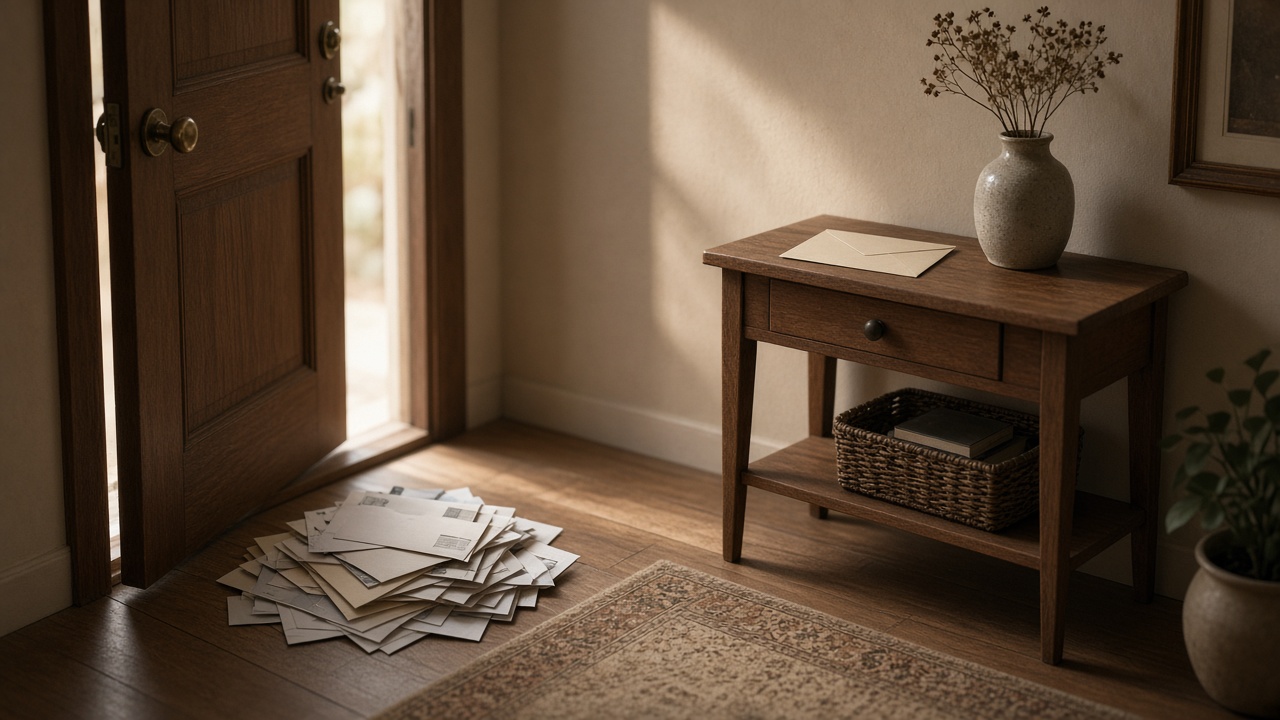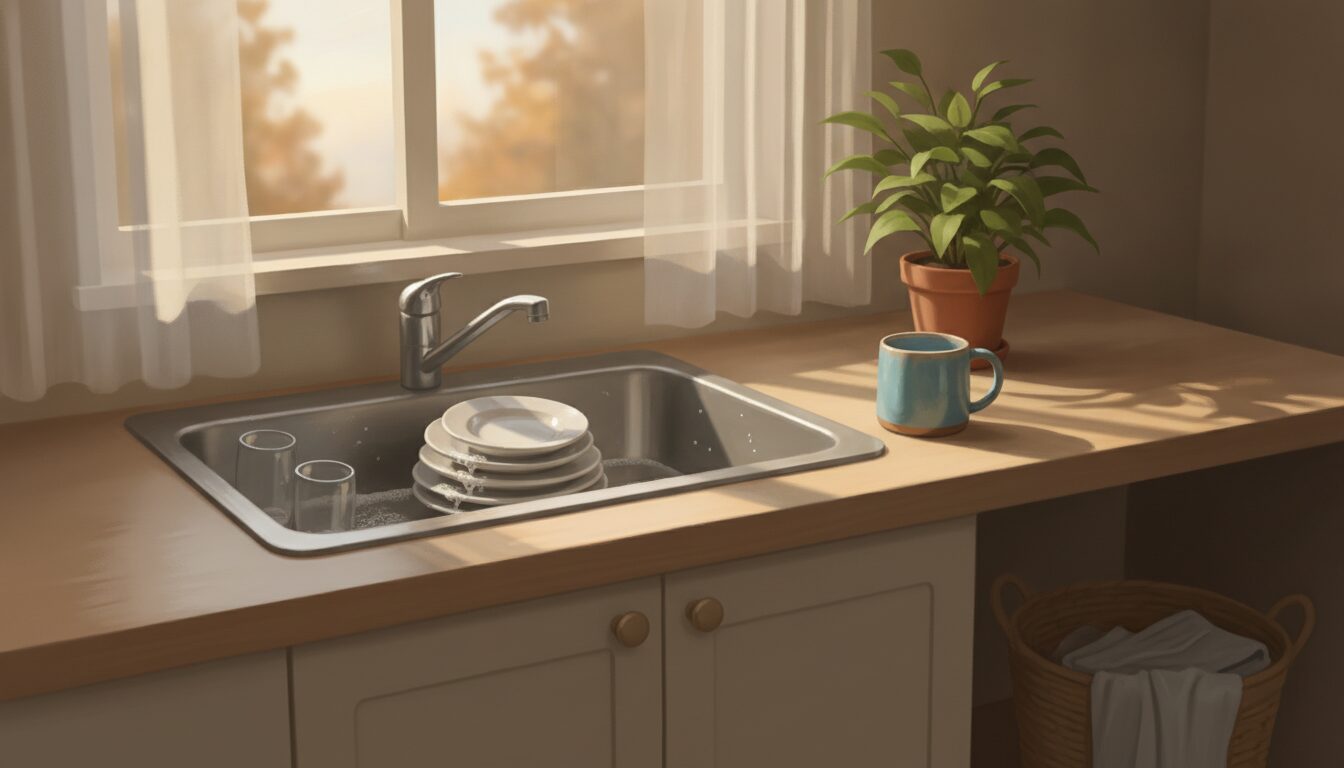


It is ten past seven and the alarm has gone off for the third time. Outside the window it is still night. You lie there doing sums: skip the shower and you get nine more minutes. When you leave the office it will be dark again. The streetlights have been on since half past four.
It has been like this for a few weeks. You sleep nine hours and wake up tired. Around four in the afternoon you want bread, biscuits, anything sweet. On Saturday a friend texted about a walk and you wrote back "next week, promise", then spent the afternoon on the sofa with the curtains half closed. In May you were running on Saturday mornings. Now the trainers by the door look like a reproach.
A verdict starts to form. I've got lazy. I'm letting myself go. Everyone else copes with winter, so what is wrong with me?
Probably nothing that deserves those words. Shorter days act on the body in ways that can be measured, and for some people the effect is strong enough to become depression with a seasonal pattern. To see why, it helps to meet the caretaker.
The caretaker who waits for daylight
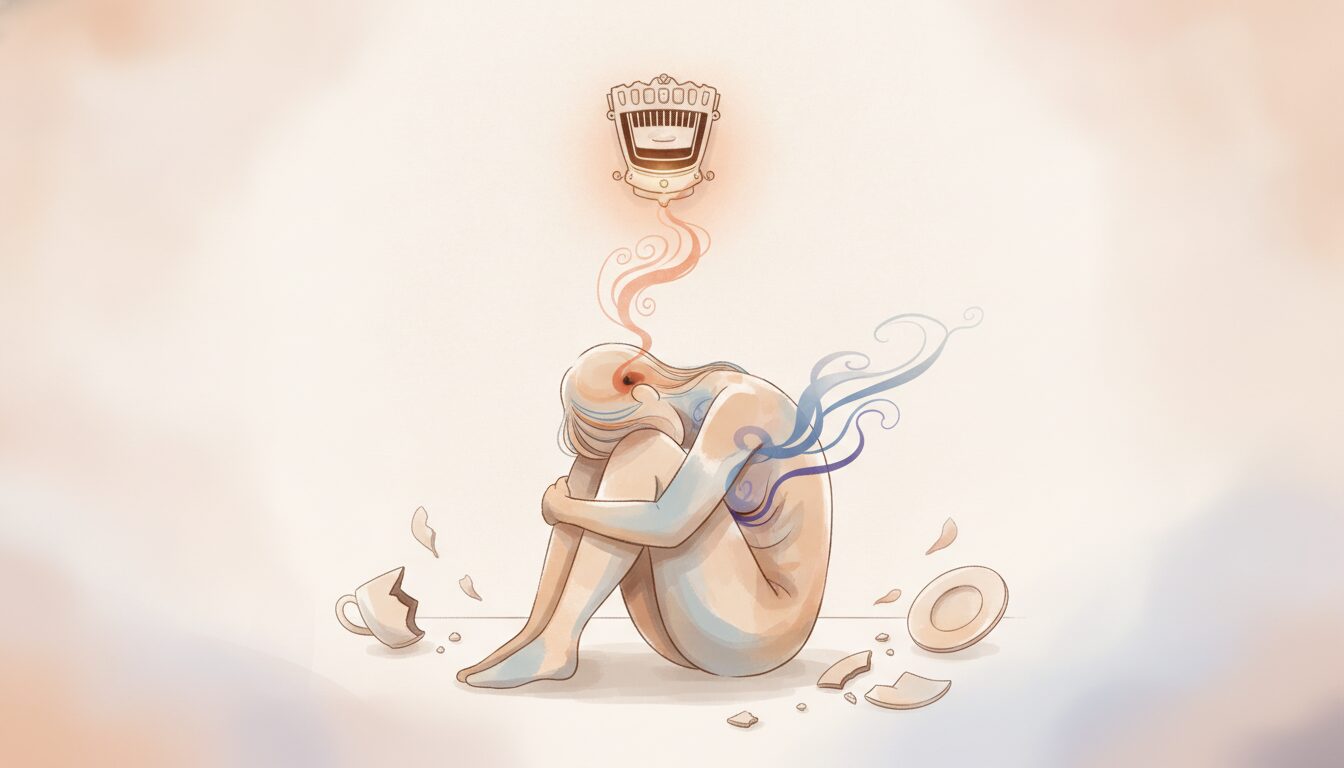
Imagine your body as a large building with a caretaker who lives inside. Every morning, when daylight reaches the windows, the caretaker raises the shutters, switches on the heating and unlocks the doors. Every evening, when the light goes, the shutters come down and the building gets ready for the night.
The caretaker is not pure fantasy. Trevor Harley, emeritus professor of psychology at the University of Dundee, explains in an article for The Psychologist that a small area of the brain, the suprachiasmatic nucleus, works as an internal clock. Like a lot of clocks, it needs help to keep time, and that help comes from morning light. Light in the morning holds back melatonin, the hormone that makes us sleepy, and helps us feel alert. Darkness lets melatonin rise again.
In winter the signal arrives late and weak. The caretaker stands at the window, sees a grey half-light and raises the shutters halfway. Then at half past four the light is gone and the shutters start coming down while you still have hours of the day to get through. The NHS says nobody knows the exact cause of seasonal depression. It is thought to be linked to less daylight and to changes in melatonin and serotonin, brain chemicals that affect mood and sleep. The US National Institute of Mental Health adds that people with the winter pattern can produce too much melatonin, which pushes them toward oversleeping.
The shutters are only halfway up, and the hallways stay dim. The caretaker needs a clearer signal.
The winter blues, or something more?
Feeling a little flatter when the days get short is common. The National Institute of Mental Health uses the everyday name for it, the "winter blues": you feel down for a while, life carries on, and spring brings you back.
Seasonal affective disorder, or SAD, is a type of depression that comes and goes with the seasons. The NHS lists low mood, losing interest in things you usually enjoy, feeling guilty, hopeless or worthless, irritability, trouble concentrating, eating more and sleeping more than usual, and sometimes thoughts of suicide or self-harm. The NIMH adds that in the winter pattern people often feel like hibernating, and that symptoms usually last four to five months of the year. The pattern has to repeat. The NHS speaks of depression symptoms at a particular time of year for two years or longer.
The calendar can also mislead you. Nicola Zingaro, a psychotherapist in Rome, points out that one hard season is not enough to speak of a seasonal pattern, and that a dip every November caused by a heavy workload, or by the anniversary of something painful, is not automatically SAD. The NIMH draws a similar line around holiday stress. Working out which it is belongs to a doctor. Your part is to notice what keeps coming back.
Why "lazy" is the wrong word
Laziness means the energy is there and you choose not to use it. In the scene above the shutters only went halfway up. You did not decide to need nine hours of sleep, or to want bread at four o'clock. Both are on the list of winter-pattern symptoms. We wrote more about this mix-up in depression is not laziness.
The verdict also has a cost. Harley, who has lived with SAD in the east of Scotland for years, puts it in one line: "being depressed is one thing; brooding on it is another." The NIMH notes that negative thoughts about winter are common in people with SAD. Researchers do not know yet whether they are a cause or an effect. Either way, they are a useful focus in treatment. Calling yourself lazy every morning puts a second weight on top of the first.
A more accurate sentence would be: "It's November, my body is getting less light and I'm running at half power. What would help the caretaker today?"
Give the caretaker a clear signal
You cannot make the day longer. You can make the light you do get count, and make it arrive at the same time.
Go outside in daylight every day, ideally in the morning. Getting as much natural light as you can is the first thing on the NHS self-care list. Ten minutes on foot on the way to work count. At your desk, sit near a window if you can.
Get up at the same time every day, weekends included. The caretaker learns from routine. A regular wake-up time and no phone right before bed are both on the NHS list too, and go easy on alcohol, the extra glass is easy to reach for on a dark day. Our piece on sleep beyond the basics goes into the evening side.
Keep a few rooms in use. When energy drops, the first things to go are the ones nobody makes you do: the friend, the walk, the hobby. The version of CBT adapted for SAD, called CBT-SAD, uses behavioural activation, which means putting pleasant, engaging activities in the calendar on purpose to make up for the interest that winter takes away. Small is fine. The Saturday walk can last twenty minutes and end in a café.
About light boxes. These lamps imitate daylight, usually at 10,000 lux, and are used for about half an hour in the morning. The NHS says they are not usually available on the NHS because there is not enough evidence to show whether they work, although plenty of users report that they help. Talk to a doctor before buying one. They may not suit people with certain eye conditions or who take medicines that increase sensitivity to light, and Zingaro adds bipolar disorder to the reasons to ask first. The same goes for vitamin D: according to the NIMH, studies on it as a treatment for SAD have given mixed results.
One honest limit. A 2024 review cited by Zingaro found only six small studies on lifestyle changes for SAD, so nobody can say these habits treat it on their own. They are a good base. If the low is deep, they are not enough by themselves.
When the shutters stay down
See your GP or a psychologist if you think you might have SAD, if the low lasts for weeks and gets in the way of work, relationships or looking after yourself, or if you have a diagnosis and treatment is not helping. The NHS lists talking therapies such as cognitive behavioural therapy, antidepressants and light therapy. In a direct comparison reported by the NIMH, CBT-SAD and light therapy worked equally well, and a study that followed patients for two winters found that the benefits of CBT seemed to last longer. In England you can also refer yourself to NHS Talking Therapies.
The predictability helps here. Because SAD tends to come back at the same time, the NIMH suggests that people with a history of it talk to their doctor about starting treatment before autumn, while noting that few studies have tested prevention so far. If this is your second or third winter like this, write down now how it feels and when it started, and take the note to the appointment. If you are still getting everything done and feel empty anyway, our article on high-functioning depression may sound familiar.
If you are already in therapy, tell the person who sees you that the winter pattern is back. It is useful information, and it changes nothing about the progress you have made.
If you are having thoughts of hurting yourself or of not wanting to be here, do not wait for an appointment. If you might act on these thoughts soon, or you have already hurt yourself, call 999 or 112 now (911 in the US). To talk to someone, in the UK and Ireland call Samaritans on 116 123 at any hour, and in the US call or text 988.
Winter can make people quiet. You stop calling because there is nothing new to say, or because sounding fine takes more effort than you have. NoOneToTalk offers anonymous peer listening 24 hours a day, so at half past five on a dark Tuesday you can say "this winter is hard" to someone who will simply listen. It is a place to talk. It is not therapy, and it does not replace a doctor.
The trainers are still by the door. A twenty-minute walk, even under a grey sky, helps the caretaker raise the shutters a little higher.