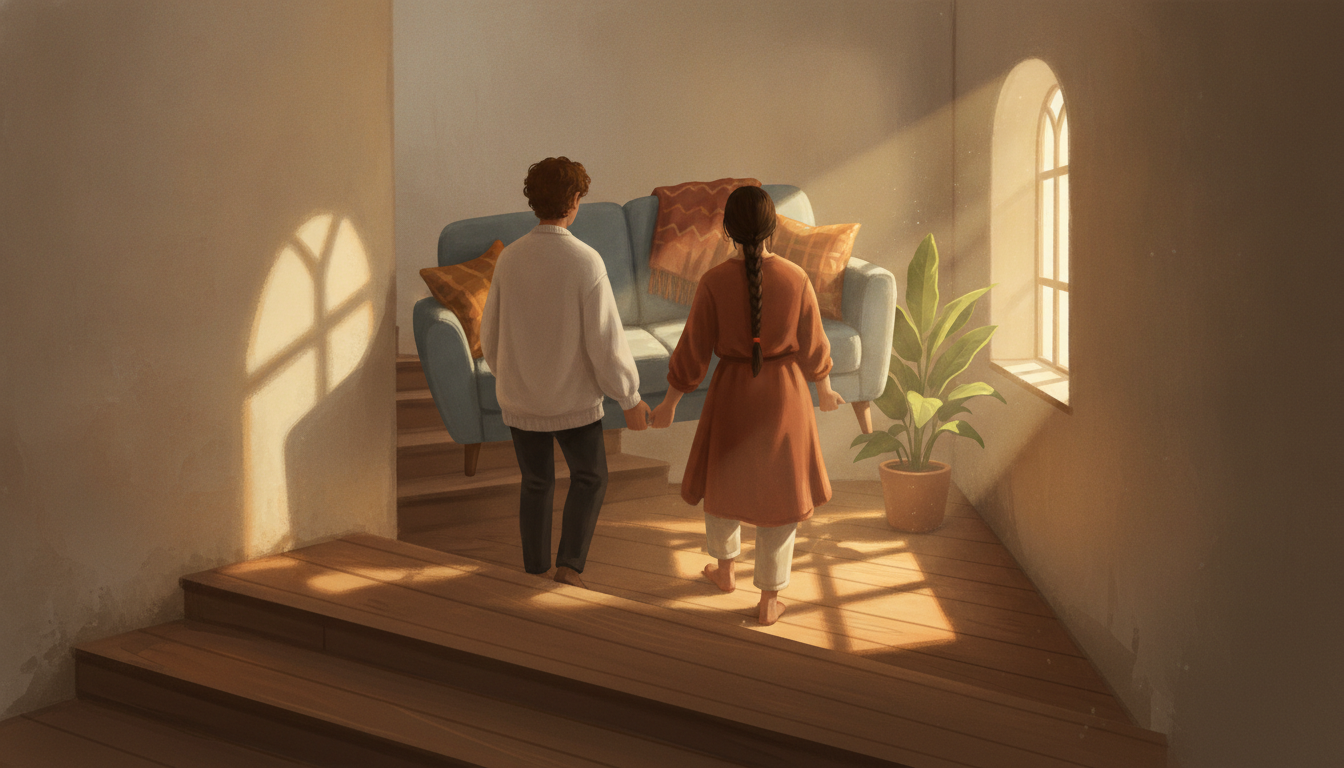

The phone is face up on the table. Three dots appear, then vanish. The chest tightens. You reread the last message, check the timestamp, invent three reasons for the pause. Absences, delays, tone, punctuation: all of it gets filed under “care.”
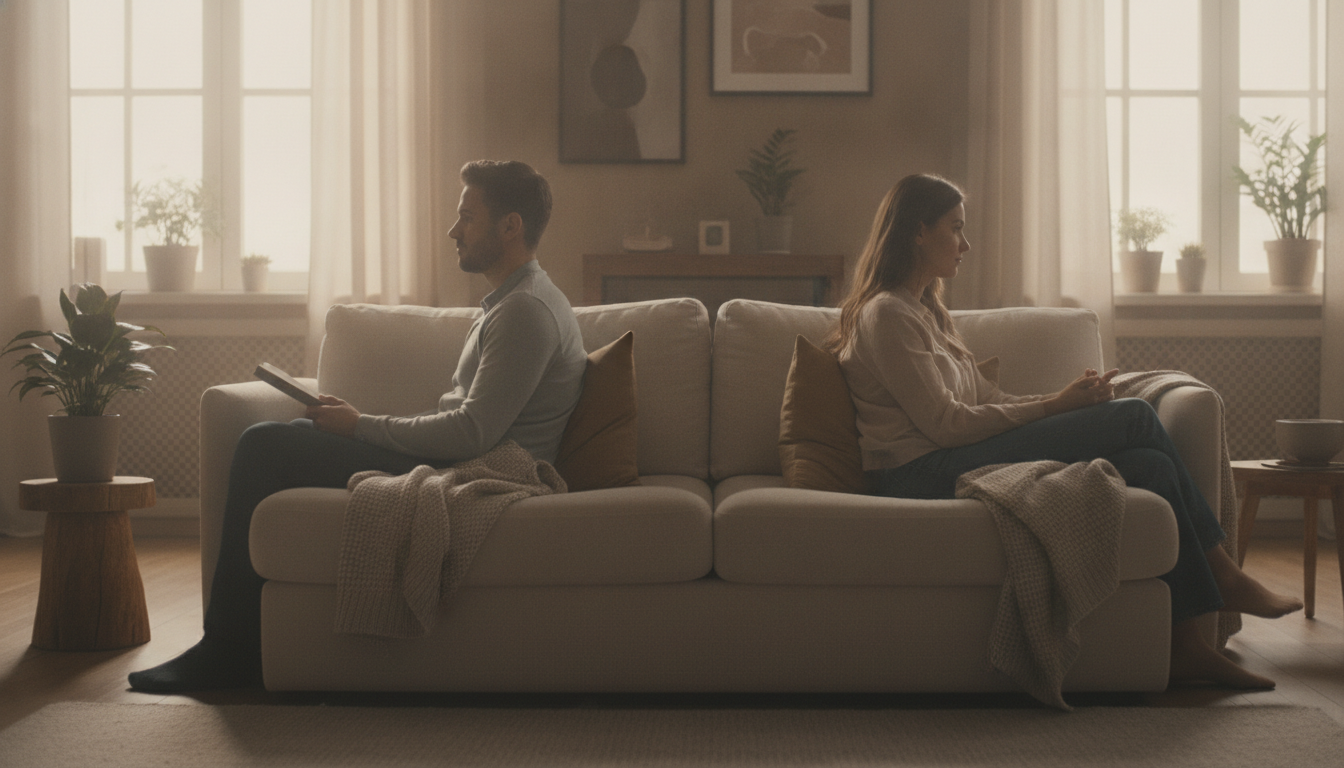
This is how love starts to feel like monitoring instead of company. You are close. You are also disappearing. The other person becomes a feed to watch; you become someone who forgot they were also allowed to live their own evening.
Healthy closeness leaves space for a self. Affective surveillance confuses care with control. The difference is not how much you love. It is whether silence can exist without turning into an interrogation.
This text is not a diagnosis and does not replace professional care.
Closeness is not constant access
Being near someone does not require knowing every mood in real time. You can care and still let the other person have an unanswered hour. You can miss them and still keep your afternoon intact.
You can love someone and stay near without occupying every inch of their inner weather, and without abandoning yours. That is not distance. It is room enough for two people to breathe.
Surveillance often wears a tender costume. “I was just worried.” “Why didn’t you answer?” “Who else was there?” The questions may be understandable. The climate they create is not closeness; it is a courtroom. Both people start performing innocence instead of presence.
How the self gets lost
When love becomes monitoring, your attention leaves your body and moves into the other person’s possible moods. You stop asking what you feel, need, or want. You ask only: are they still here? Are they still mine? Did I cause the silence?
That is not devotion. It is a self on hold. Hobbies thin. Friendships wait. Opinions soften so they will not trigger distance. You call this adaptation. Over time it is erasure: quiet, justified, almost invisible.
The paradox is sharp. The more you watch, the less you inhabit. The more you inhabit the other, the less of you remains to be loved. You end up managing a relationship instead of living inside it.
Fear wearing the uniform of care
Surveillance rarely begins as cruelty. It often begins as fear of abandonment dressed as responsibility. A delayed reply becomes a story of loss. A closed door becomes a verdict. The mind, trying to prevent pain, builds a control room.
Control soothes for minutes. Then it demands more data. The nervous system never gets the signal that the relationship is a living space, not a crime scene. Care wants contact. Control wants certainty. Certainty, in human closeness, is a fantasy that costs both people their air.
Returning to your own evening
I am not asking you to become cold or indifferent. Distance as punishment is another form of control, pointed the other way. The useful move is smaller: return some attention to the room that is yours.
When the urge to check switches on, try naming the weather: “This is fear of loss, not proof of betrayal.” Then one concrete act of self-presence: eat, walk, finish a sentence of your own life. Send a message that is true rather than investigative: “I miss you and I am uneasy; I don’t need a full report, I need to know we’re still okay.”
That sentence keeps contact open. It does not pick the lock of the other person’s mind. It also refuses the lie that you must vanish in order to stay chosen.
Closeness that still has a self in it
Two people can be near without occupying each other’s entire inner weather. That is not less love. It is love that can breathe. If a relationship only feels safe when every silence is explained, the safety is performance under watch.
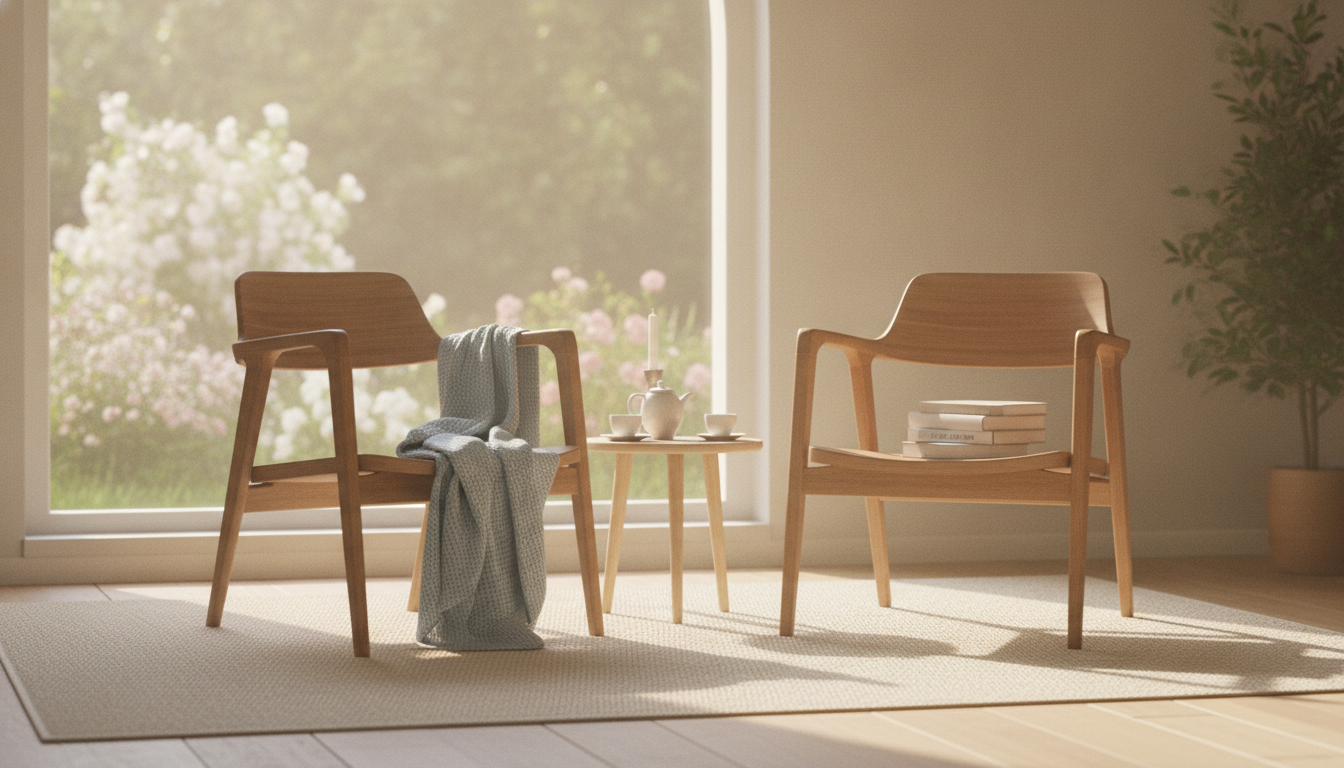
You do not have to lose yourself to stay close. You may need help (a therapist, a trusted friend, a pause) to take your hands off the monitoring and put them back on your own life. Healthy closeness leaves air, sight, and a self still sitting in the chair.
If you or someone you know is in crisis, please seek help. International directory: findahelpline.com.