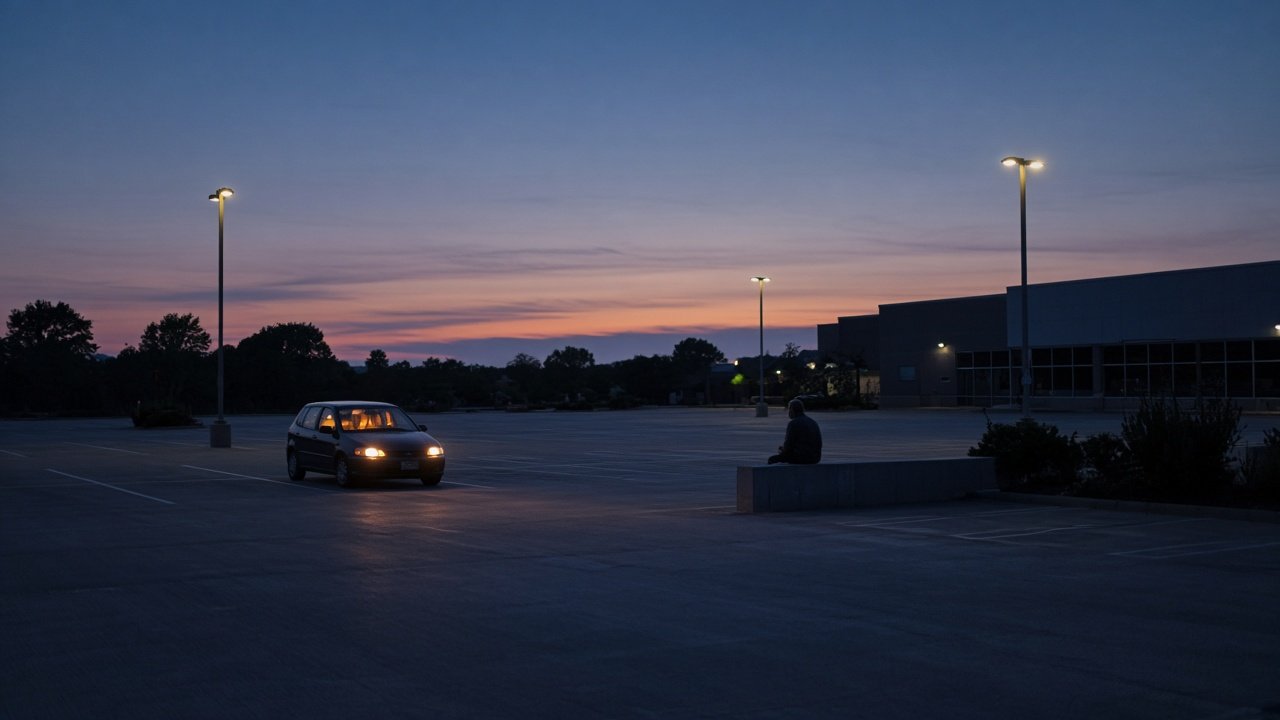


The kitchen light is still on at 00:40. You already checked the lock. You already read the last message twice. Your mind runs the loop again: Did they sound off? Should you send one more text? Going to bed feels like leaving a post empty.
You tell yourself this is love. Responsible people stay vigilant. If you stop scanning, something bad will slip through, and the failure will have your name on it.
Somewhere along the way, you may have learned that worry is proof you care. The myth says that if your mind clocks out, you are careless or unloving. That story can keep a person on unpaid mental guard duty for years, long after the useful check is done. This text is general psychoeducation. It is not a diagnosis, not a substitute for professional care, and not an emergency service.
The night guard after closing
Picture a night guard in an office building. The last employee left hours ago. The lights are off. The doors are locked. Still the guard walks the corridors, checking empty rooms, because stopping feels like negligence. The building does not need another round. The nervous system has not received the memo that the shift ended.
That is one way chronic worry can feel when it dresses itself as responsibility. You already locked the door. You already made the plan. Your mind keeps patrolling hallways that are empty. The patrol is sincere. It is also exhausting, and it can crowd out the quieter forms of care that actually land.
The guard image is a teaching picture, not a verdict on your character. Some vigilance is useful. Real danger, caregiving load, or a fragile season can require real checks. The problem starts when the shift never ends, when rest feels like betrayal, and when love gets measured by how many scenarios you rehearse before sleep.
A useful distinction
Care often looks like one clear action: a call made, a plan written, a concrete offer of help, then room for the other person (and for you) to breathe. Anxiety dressed as responsibility looks like endless mental patrol: replaying tone, inventing futures, monitoring reply times, rewriting messages, and feeling guilty when you try to stand down.
The first can protect. The second drains everyone, including the person you meant to protect. Confusing them is easy when worry once kept you safer, or when family and work rewarded the person who never clocks out. Gratitude for being dependable and hunger for off-duty hours can sit in the same body. One does not cancel the other.
If your mind lives mostly ahead of the present moment, our piece on when anxiety lives in the future names that pull. If the alert never seems to end, read the mind that never clocks out. If recovery talk starts to sound like another performance metric, recovery is not productivity is a related door.
What the days can look like
Morning: you wake already forecasting someone else's mood from a parked car or a kitchen light. Midday: you rewrite a message four times so nobody can misread it. Evening: you cannot watch a film without half an ear on the phone. Night: you invent three versions of tomorrow's hard conversation and still feel unprepared.
From outside, you look reliable. Friends ask you for advice. At work you catch problems early. Inside, rest feels like negligence. You may notice jaw tension, a stomach that stays braced, or a flash of irritation when someone else seems calm. Irritation does not prove you are cold. It can be a body that has been on duty too long.
Some people over-check the people they love and call it devotion. Others over-carry colleagues' unfinished tasks and call it teamwork. Both patterns can grow from the same fear: if I stand down, harm will arrive and I will be the one who failed to prevent it. Naming the fear does not make you selfish. It makes the cost visible.
One small off-duty practice
Start smaller than a vow to "stop worrying." Pick one window you can actually keep tonight. Fifteen minutes. If it is safe in your life situation, put the phone in another room. Say out loud or on paper: "I already did what was mine to do today." Then stay with the discomfort without sending the fifth check-in.
If your body needs a short landing pad, try one concrete step from our note on grounding techniques that actually work: feet on the floor, name five things you see, cool water on the wrists. Grounding will not erase love. It interrupts the patrol long enough for you to notice you are still here.
When the urge to re-enter the corridor returns, ask one sorting question: What is mine to do once, what can I influence without owning, and what have I assumed without enough authority or control? You do not have to put the whole building down tonight. Noticing which hallway was never yours alone is already a shift.
If standing down brings panic that does not ease, or if worry is tied to trauma, coercion, or fear for your safety, stop treating this article as a DIY manual. Speak with a qualified professional. If you are in crisis, use local emergency or crisis services first. An anonymous peer space can hold the sentence "I cannot stop scanning" without forcing you to become careless overnight.
How NoOneToTalk can sit with you (without replacing therapy)
NoOneToTalk offers anonymous conversation with peers, with Kibo, and, when it fits, therapist rooms. It is a low-threshold place to practice the awkward line ("I am tired of being the night guard") before you say it at home or at work. Therapy, when available, remains the stronger container for patterns rooted in early survival. Peer chat does not replace that work.
If tonight you only need to put one true line somewhere safe, start at downloads. You do not have to prove love by never clocking out. One clear act of care, then a short off-duty window, can be enough to test whether the building still stands when you stop walking empty corridors.
Care can be warm and finite. Endless patrol is a different job. You are allowed to hang up the keys for a while and still be someone who loves well.