

It is the Friday of the team's Christmas dinner, and you arrive ten minutes late on purpose so you will not be the first one at the table. The restaurant is loud. You stand near the coat rack with a glass you have not touched, looking for a face you know, and you feel the heat start in your neck and climb into your cheeks.
Someone from accounts asks how your year has been. Your voice comes out higher than you meant. You laugh at the wrong moment, you know it, and for the next hour you hardly speak, because one thing now feels certain: they all saw your face go red. On the bus home the sentence arrives fully formed. Everyone could tell. I'm hopeless at these things.
The heat in your face was real. The rest of that sentence deserves a second look, because what anxiety tells you about other people's eyes is usually wrong, and there is a reason it feels so convincing. Picture a small mirror.
The mirror in front of your face
Imagine walking into that restaurant holding a pocket mirror up in front of your eyes. All evening you look at the room through it. In the glass you see your cheeks, the smile that feels crooked, the hand gripping the stem of the glass a little too hard. The redness fills the whole frame. Behind the mirror the room is a blur: the colleague with the new haircut, the person by the window who is also standing on their own.
That mirror is a way of picturing self-focused attention, the habit of watching yourself while you are with other people. The psychotherapists Gill Straker and Jacqui Winship, writing in The Guardian, describe how people with social anxiety hold themselves to very high social standards and keep observing themselves in the moment to check whether they are meeting them. That self-scrutiny, they write, "leads to clumsiness, blushing or stammering", which makes people even more self-conscious.
So the mirror shows you a magnified face, and staring at it adds to the very thing you fear. The cognitive neuroscientist and science writer Christian Jarrett puts it plainly in BBC Science Focus: excessive self-focus is one of the main drivers of social anxiety, and constantly monitoring what you do and say will fuel your nerves. In the worst cases, he adds, it makes people act more awkwardly.
What the room actually sees
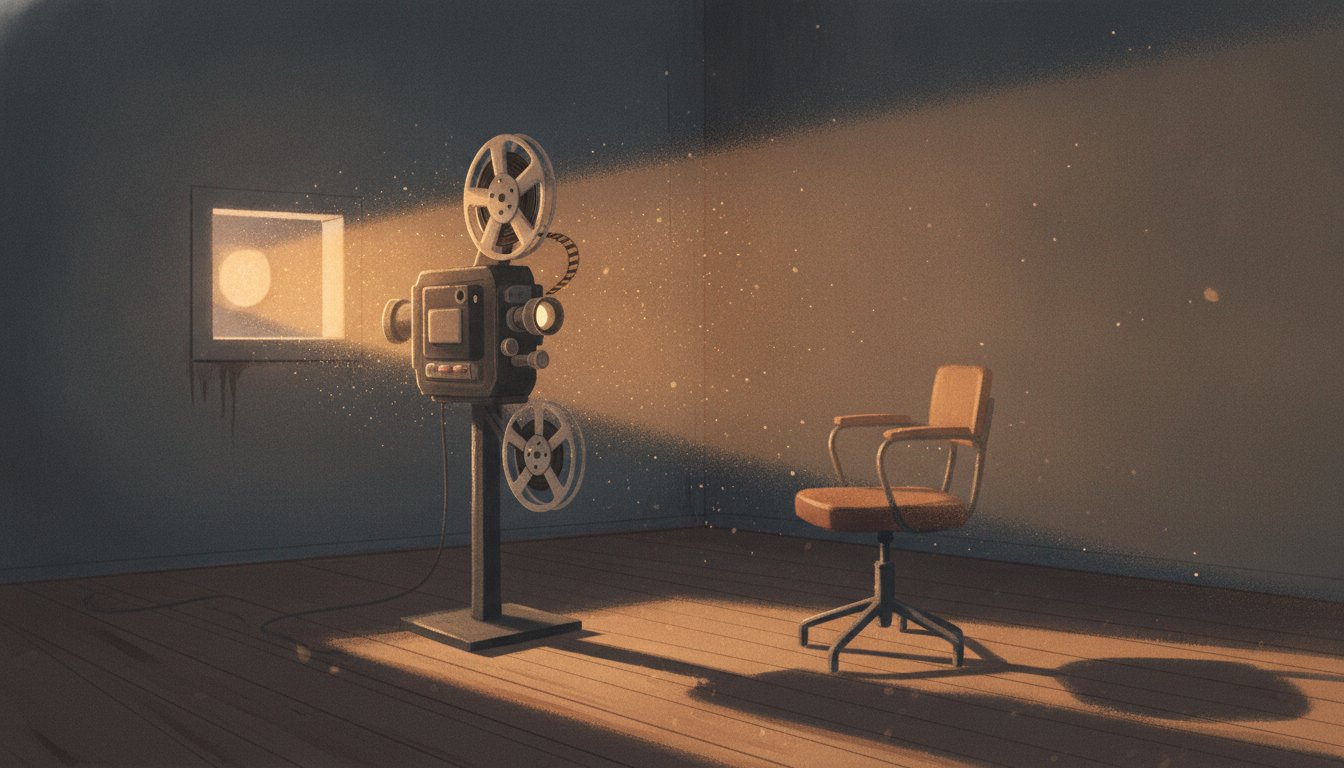
From the other side of the table, the picture is very different. Your face is one of thirty. The person from accounts is wondering whether her question sounded boring. A good number of the people there are holding a mirror of their own.
Jarrett describes the study that gave psychologists the name "spotlight effect". Around the year 2000, volunteers were asked to wear an embarrassing T-shirt (at the time, a Barry Manilow one) in a group and then to estimate how many in the room had noticed it. They massively overestimated the number. His reading is simple: a lot of people are wrapped up in themselves, and they are not judging you as closely as you think.
He mentions another study he likes, from Washington University in St Louis. Volunteers with social anxiety rated the quality of their relationship with a friend, and then the researchers asked that friend the same question. The friends rated the friendship more positively than the volunteers did. In other words, your friends probably like you more than you realise.
None of this means a blush is invisible. Someone might see it. Noticing that a person looks a bit warm is a long way from deciding they do not belong at the party, and that second step usually happens only inside the mirror.
Why gripping it tighter makes it worse
When an evening feels dangerous, it makes sense to protect yourself. Psychologists call these moves safety behaviours. The NHS inform self-help guide gives examples such as keeping quiet during conversations or avoiding eye contact. Straker and Winship add speaking quietly and dressing plainly so as not to be the focus of attention. Arriving late so nobody sees you come in belongs on the same list.
Each one is a way of holding the mirror closer. It calms you for a moment and then it costs you. The NHS guide has an example that could have been written about that dinner: you stay quiet at a party to feel less anxious, end up hardly speaking to anyone, and then worry that no one wants to talk to you. The mirror has manufactured its own evidence.
Some people are surprised that a party scares them more than a presentation. Luciana Massaro, a CBT psychologist in São Paulo who works with executives, explains why. A meeting has an agenda and a clear end. A party is open and unpredictable, and nobody tells you when it is all right to go home. Feeling lost there says something about the situation. On its own, it does not prove you lack social skills.
Skipping every invitation is the tightest grip of all. Jarrett is blunt that avoidance, whether that means staying in or leaning on alcohol, never helps anxiety and only fuels it. Massaro says the same thing in her own words: each event you avoid strengthens the belief that you cannot cope.
Putting the mirror in your pocket
You will not throw the mirror away for good. What you can do is keep it in your pocket for longer stretches, and take it out less often.
Before the evening, choose. Jarrett suggests deciding which gatherings you really want or need to attend, instead of letting every invitation hang over you. If you want to turn one down, our piece on setting boundaries without guilt may help with the wording. For the ones you go to, set a small and concrete goal. Massaro's example is to stay 45 minutes and talk to at least two people. She also notes that arriving early is often easier, because the room fills up around you, the opposite of the ten-minute delay that felt safer.
Prepare one sentence for the hard moment. Jarrett recommends "if-then" plans, such as: if I feel left out, I will look for the friendliest-looking person and ask them one question. The question can be ordinary. Have you finished your Christmas shopping? Are you going away over the break?
During the evening, give your eyes a job outside the mirror. Jarrett's suggestion is that when you catch yourself self-focusing, you listen properly to what someone is saying, or look at what they are wearing. He also proposes keeping an eye out for anyone else who seems uncomfortable or left out, since there are bound to be some. The person by the window is your best chance of forgetting your own face for ten minutes. Massaro adds that a small task, like helping with the food or the music, gives your hands and your attention somewhere to go.
If the heat climbs and you want to run, try Massaro's three-minute rule: allow yourself to stay uncomfortable for three minutes before deciding whether to leave, because the anxiety often drops. If it does not, a trip to the bathroom or a short walk outside is allowed. Our guide to grounding techniques has a few exercises that fit in a corridor. If the feeling turns into a pounding heart and a sense of losing control, read what a panic attack is and is not.
Afterwards, skip the post-mortem. Massaro advises against analysing every interaction obsessively, and suggests counting the fact that you went. If you lie awake replaying the moment your voice cracked, our piece on replaying the conversation explains why the rerun feels like protection and is not.
When the nerves are bigger than one party
Some tension before a big gathering is normal. Beatrice Casoni, a psychiatrist in Ferrara interviewed by Vanity Fair Italia, describes a faster heartbeat or a little trouble concentrating before a family get-together as ordinary reactions to social stress. It is different, she says, when the anxiety is out of proportion and persistent, and comes with systematic avoidance, panic attacks or long rumination. Then a specialist assessment is a good idea.
Social anxiety disorder is common, and it can be treated. Straker and Winship describe graded exposure, which means facing feared situations in small steps with support, and they are honest that the pace of change can be slow. A GP or a CBT therapist can help you plan those steps.
If you are having thoughts of hurting yourself or of not wanting to be here, do not wait for an appointment. If you might act on these thoughts soon, or you have already hurt yourself, call 999 or 112 now (911 in the US). To talk to someone, in the UK and Ireland call Samaritans on 116 123 at any hour, and in the US call or text 988.
Sometimes the worst part is the ride home, or the hour after, when you would like to tell someone "my face went bright red and now I feel ridiculous" and there is nobody to text. NoOneToTalk offers anonymous peer listening 24 hours a day. You can write it exactly like that, to someone who will listen without ever seeing your face. It is a place to talk. It is not therapy, and it does not replace a doctor.
Before the next invitation, pick one moment in the evening when you will lower the mirror: the first question you will ask, or the person by the window you will go and stand next to. Your cheeks may still be warm when you do it. Let them be.