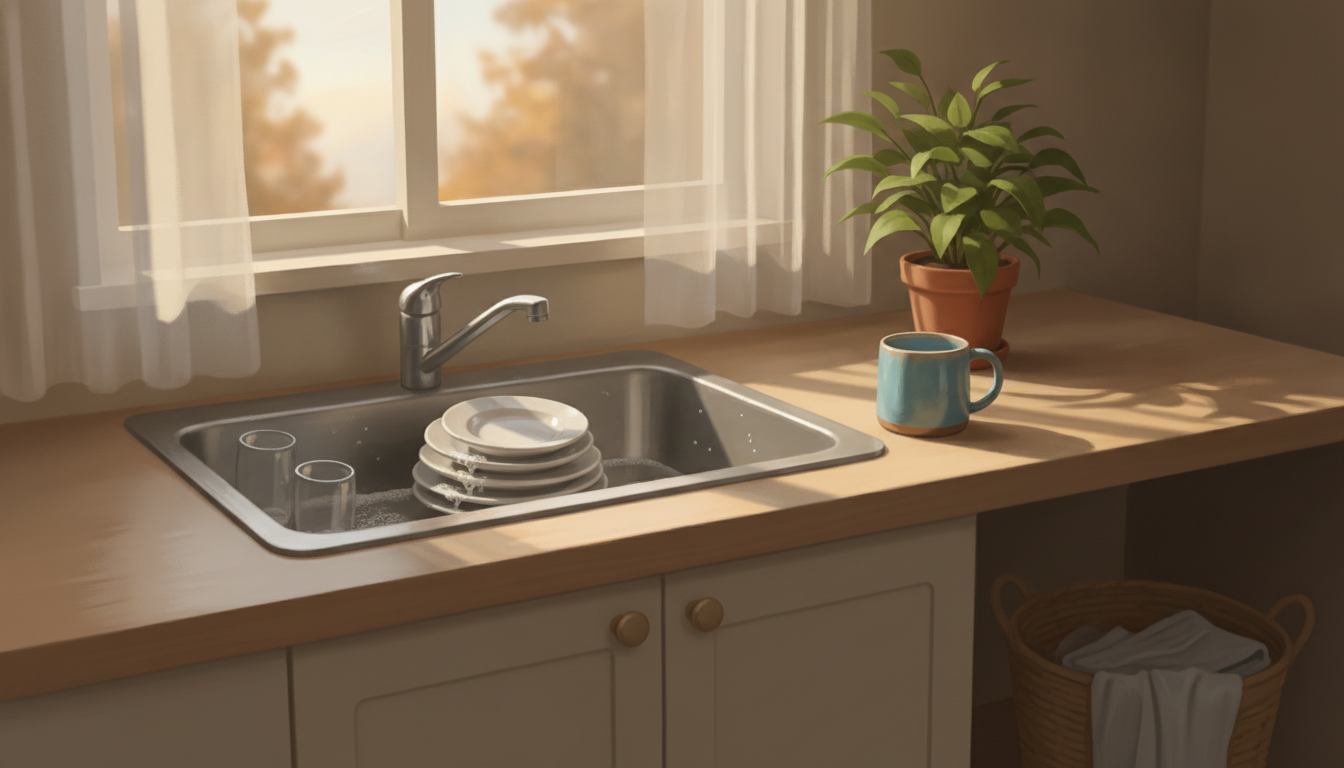


She sits at the table. The coffee is warm. The window is open. Nothing terrible has happened this morning. And yet the room feels as if someone turned down the color.
Not black. Not dramatic. Just flatter. The same objects, the same light, but without the usual charge of meaning. Getting dressed feels heavy. Answering a message feels far. Tears do not arrive. What arrives is a quiet emptiness that starts making the decisions.
This is one of the most misunderstood faces of depression. We were taught to look for sadness: crying, visible despair, a storm. Often depression looks more like a dimming of meaning. The day still asks you to move through it anyway.
This text is not a diagnosis and does not replace professional care.
Sadness and emptiness pull in different directions
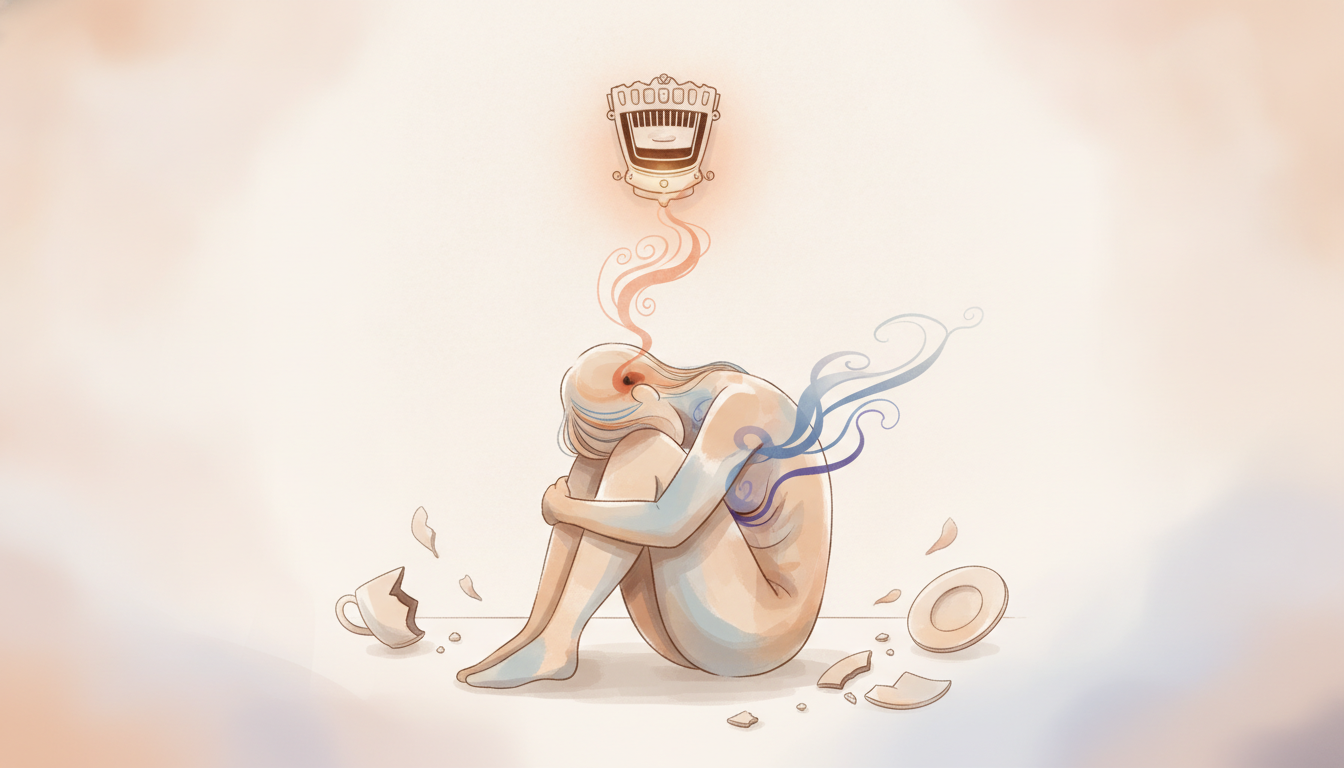
Sadness has a direction. It points toward something you lost, feared, or hoped for. It hurts, but it still speaks. Emptiness is different. It does not shout. It subtracts. Colors stay, but they lose saturation. Tasks stay, but they lose their “why.”
People living this often say: “I’m not sad. I’m just… nothing.” They feel guilty for not crying “enough,” or for looking functional while feeling hollow inside. That guilt is cruel and misplaced. Depression does not owe you theatrical tears to be real.
Depression can look like nonstop weeping. It can also look like a quiet dimming of vitality, interest, and sense: a room where someone lowered the color and left you responsible for moving through it anyway.
When meaning runs thin
From outside, life can still look intact. You go to work, cook, smile on cue. Inside, every ordinary step costs more than it should. Friends may say “but you seem fine.” They see the routines moving. They do not feel how thin the meaning has become.
And you may start to doubt yourself: if I can still function, am I allowed to call this suffering?
Yes. Functioning and feeling alive are different things. A body can complete routines while the sense of them has thinned. Depression often hides inside that gap: between what you still do and what you can no longer feel.
The fatigue that sleep does not fix
There is a tiredness of muscles, and there is a tiredness of meaning. The second one does not always answer to rest. You can sleep and wake up already exhausted by the idea of another day that asks for effort without offering a clear reason.
This is not laziness. Laziness still chooses comfort. Emptiness does not choose; it drains choice itself. The smallest decisions (shower, meal, reply) feel like climbing without a summit. Recognizing that distinction matters, because self-blame only drains you further.
A minimum space of choice
I am not asking you to “cheer up” or invent gratitude on command. That advice often deepens the shame. The first useful move is smaller and more honest: name what is happening without forcing it to look like classic sadness.
Try this quiet sentence: “Something in me has gone flat. The color is low. The meaning is thin.” Not as a diagnosis. As orientation. When you can locate the emptiness, you stop arguing with yourself about whether you are “sad enough” to deserve care.
From there, one small act of presence can matter more than a grand plan. Drink the water. Open the window. Send one true message to someone safe: “Today feels empty, not dramatic. And I need not to be alone with it.”
Company while the day is flat
Emptiness prefers silence and the story that “nothing is wrong enough.” Asking for company does not refill meaning overnight. It does something more practical: it keeps you from carrying the flat day alone.
Call or text one person. Ask them to sit with you for ten minutes, on the phone or in the same room, without fixing anything. Depression is not only sadness. Often it is the quiet theft of color and meaning. Saying that out loud to someone who stays is already a form of care.
If you want to understand anonymous support on NoOneToTalk, you can explore this overview at your own pace.
If you or someone you know is in crisis, please seek help. International directory: findahelpline.com.