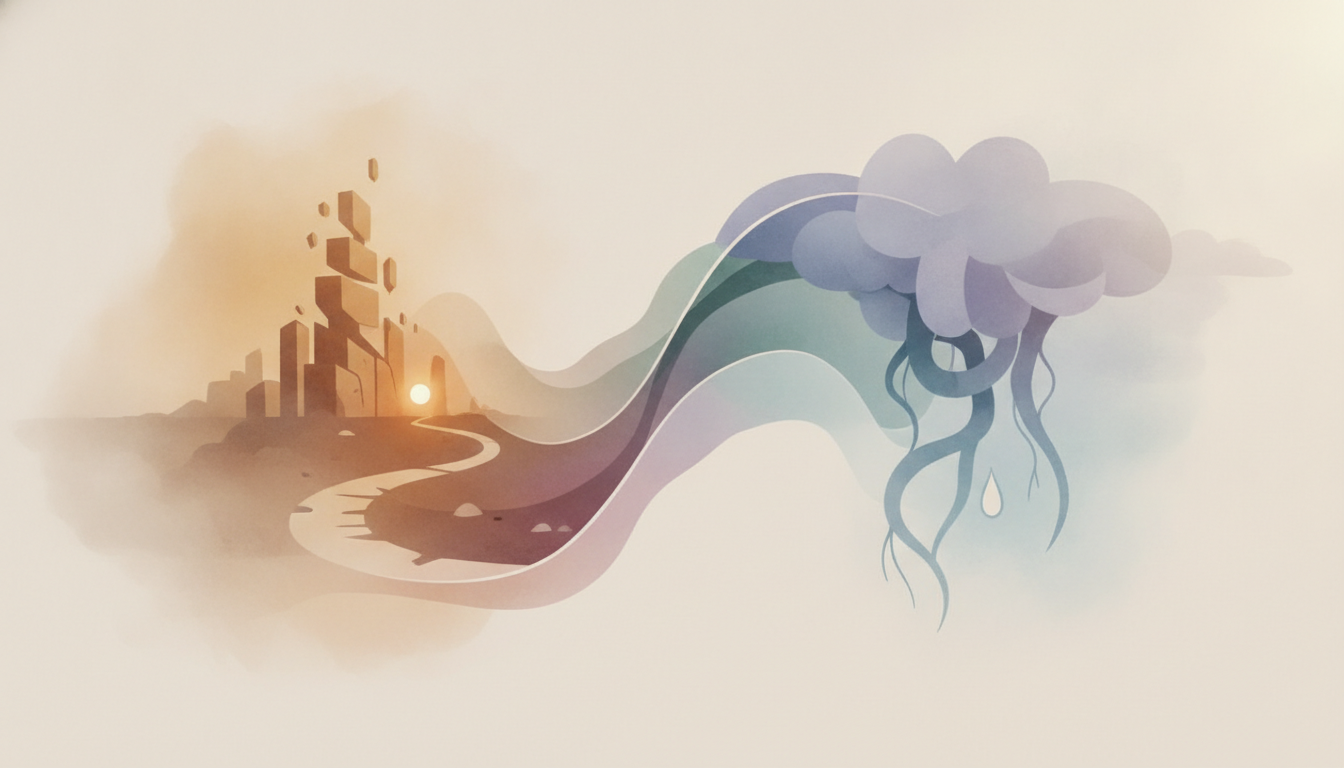


Burnout is often described as if it were a single state, total exhaustion, the wall, the breaking point. But anyone who has watched their own slide into it knows that, in reality, it tends to unfold gradually, in stages that can feel almost ordinary while they are happening. By the time the wall is unmistakable, the early signals have usually been ignored for months or years.
Several models of burnout exist. The work of Christina Maslach helped define burnout as a syndrome of exhaustion, cynicism, and reduced sense of accomplishment. Other clinicians have mapped the trajectory into stages. The five-stage model below is a synthesis used widely in occupational psychology to help people recognize where they are.
Stage 1: The Honeymoon
This stage usually does not look like a warning at all. A new job, a new project, a new role, and with it, a surge of energy, optimism, and willingness to give. You take on extra responsibilities. You skip breaks because the work feels meaningful. You stay late and feel good about it.
The risk here is not the enthusiasm itself. It is that you start building habits (of overextension, of skipping recovery, of identifying with output) that will quietly carry you into the later stages.
Stage 2: Onset of Stress
Some days now feel harder. You notice yourself getting more easily irritated, sleeping less well, snapping at small things, finding it harder to focus. The work is still possible, but there is a new effort required to do it. You may dismiss these signs as a rough week, a bad night, a temporary phase. Often they are not temporary; they are early data.
Stage 3: Chronic Stress
What was occasional becomes constant. Sleep is consistently disrupted. Energy is low even on days off. You may rely more on caffeine in the morning and alcohol or scrolling at night to take the edge off. Cynicism creeps in, you begin to resent the work, the people, the demands. Small joys you used to find in your day quietly disappear.
This is the stage where many people first realize something is wrong, but also the stage where it is easiest to keep pushing. The system has not collapsed. The lights are still on. You can still perform, and the world is still asking you to.
Stage 4: Burnout
By the time you can name it as burnout, your nervous system has been trying to get your attention for a long time.
This is the stage most people imagine when they hear the word. Physical symptoms become harder to ignore: persistent fatigue, frequent illness, headaches, gut problems. Emotionally, there is a deep flatness, often mixed with anger and self-criticism. Work feels meaningless. Tasks that used to take an hour now take a day. You may withdraw from friends, hobbies, even rest itself, because nothing seems to refill you.
At this point, true recovery typically requires more than a long weekend. It requires structural changes (to workload, to expectations, to how you relate to your own limits) and often professional support.
Stage 5: Habitual Burnout
If burnout is not addressed, it can become embedded. The exhaustion, cynicism, and sense of inadequacy become the baseline rather than the exception. People in this stage often no longer remember what it felt like to be well. They may develop chronic mental and physical health conditions: depression, anxiety disorders, cardiovascular issues, autoimmune flares.
This is not a moral failing. It is what happens when a human system is asked to operate without recovery for too long.
Where Are You, and What Now
If you recognize yourself anywhere on this map, it is worth taking seriously now rather than later. The earlier you intervene, the smaller the changes required. That can mean honest conversations about workload, real time away that includes complete disengagement, rebuilding sleep, rebuilding connection, and (at any stage) talking to a therapist or your doctor. Burnout is not a personal weakness. It is a signal about the gap between what is being demanded of you and what you have to give.
If the exhaustion mixes with a low mood that follows you outside work, our piece on burnout or depression helps you sort the signs without self-diagnosing.
If you want to understand what NoOneToTalk is, you can explore this overview at your own pace.
Closing that gap, even slowly, is how recovery begins.
The Five Stages of Burnout: Common Questions
What are the five stages of burnout?
In the model above they are the honeymoon, the onset of stress, chronic stress, burnout, and habitual burnout. It is a way to recognize the direction things are moving, not a diagnosis.
How long does each stage last?
There is no fixed timetable. Some people move through the early stages in a few months, others stay in chronic stress for years. What matters more is whether rest still refills you.
How can I tell which stage I am in?
Look at your days off. If a weekend still brings you back, you are probably in the early stages. If you start Monday as tired as you ended Friday, and the cynicism has stayed, take it as a sign of the later ones.
When should I ask for help?
At any stage, and sooner if sleep, mood or your body keep getting worse, or if the low mood follows you outside work. A doctor or a psychologist can help you sort out what is going on. If you have thoughts of hurting yourself, contact your local emergency number or a crisis line now; findahelpline.com lists them by country.