

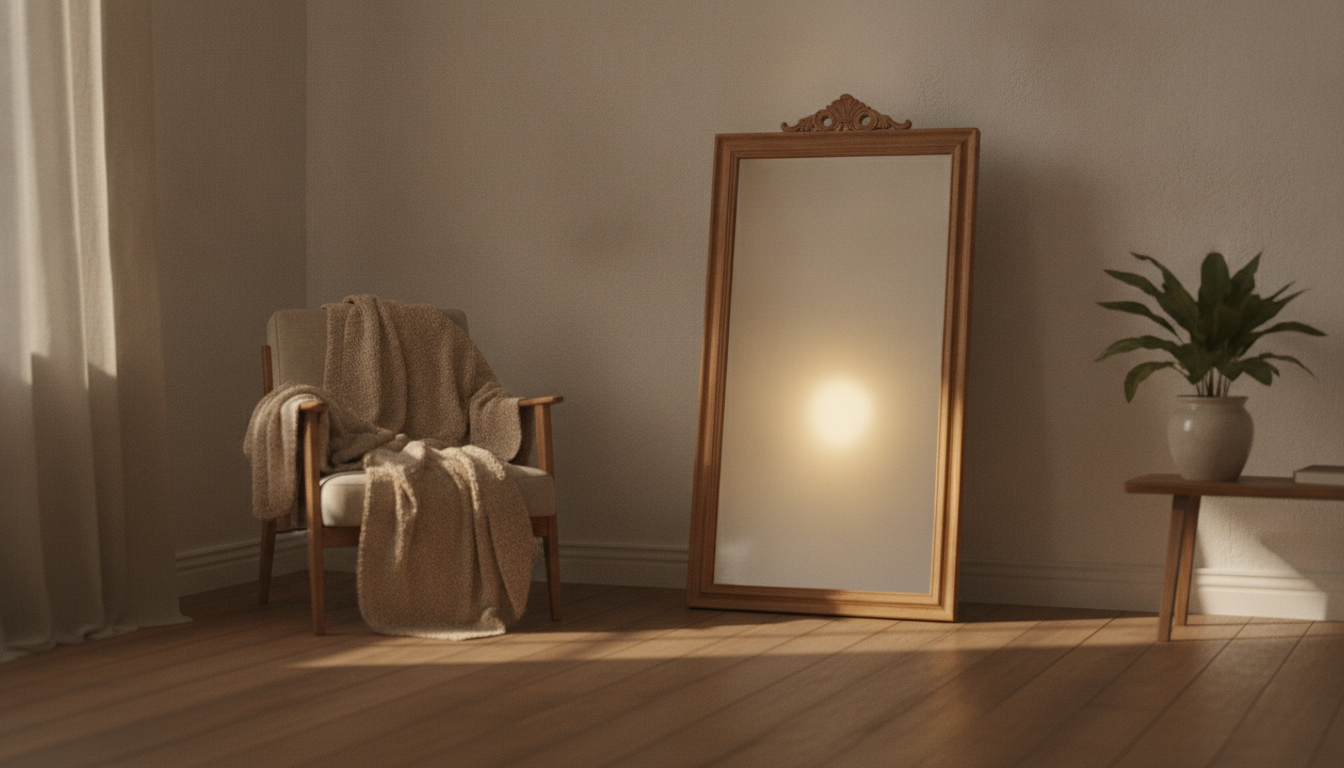
You check the message. Then the silence after it. Then your face in a glass reflection that suddenly feels like a courtroom.
Nothing catastrophic has happened. Someone simply did not reply, or replied without warmth, or looked away in a room. And yet the day tilts. As if the way you know yourself only lights up when another pair of eyes is aimed at you.
This is what fragile self-worth often feels like: not an empty shelf where value should sit, but a borrowed pair of eyes. You look at yourself through someone else’s sight, and when that sight flickers, you flicker too.
This text is not a diagnosis and does not replace professional care.
When worth needs a witness
Alone, your sense of yourself can go dull. With company, it brightens, and you become whatever their expression suggests. Praise, and you exist. Indifference, and you thin out. Criticism, and the whole room tilts toward shame.
People living this way are not “without value.” They often have plenty of competence, care, and history of effort. What they lack is ownership of the gaze. The verdict arrives from outside, so the self waits in the lobby for a stamp.
That is the distinction that matters. Fragile self-esteem is not the absence of worth. It is dependence on an external witness to confirm that worth exists.
Borrowed eyes are exhausting
Living through borrowed eyes is unpaid labor. You scan faces for weather reports. You rewrite sentences in your head before you speak. You leave a conversation and replay it like an exam you might have failed. The body stays slightly braced, as if the next look might revoke your right to take up space.
None of this means you are vain. It often means you learned early that safety and belonging arrived through other people’s approval. The nervous system did its job. It just never got the memo that you are allowed to be the primary witness of your own life.
Social media, workplaces, even kind relationships can keep feeding the habit: a like, a nod, a “you did great” that soothes for minutes and then asks to be renewed. The audience becomes oxygen. When it thins, panic feels like truth.
Bringing the gaze home
Rebuilding self-worth is not a speech about how amazing you are. Affirmations shouted into a hollow room rarely stick. What sticks is practice: returning the gaze inside, briefly, without waiting for applause.
Try noticing one fact that does not need a witness. You kept a promise to yourself today. You felt tired and named it. You stayed kind when you could have sharpened. These are not trophies for display. They are evidence that a self is already living here, whether or not the room is clapping.
When the old reflex arrives (“What do they think of me?”) you can add a quieter question beside it: “What do I know about how I showed up?” Not to replace every opinion. To stop outsourcing the entire verdict.
An audience of one
You will still care what people think. Belonging is human. Their view can stay as information. It does not have to be the only light in the room.
If your worth has lived for years in borrowed eyes, reclaiming it will feel awkward, even lonely. That loneliness is often the first honest company: you, without a curator. Stay there a little longer than the urge to check your phone. Ask what you need, not only what would look good.
Try one practical move tonight. Before you open an app or reread a thread, name one thing you did that required no audience: washed a dish, told the truth once, rested without explaining it. Say it out loud if you can. That is an audience of one. Self-worth grows there first, not when the room finally agrees.
If you or someone you know is in crisis, please seek help. International directory: findahelpline.com.